Unpacking Protein: A Q&A with NC State’s April Fogleman
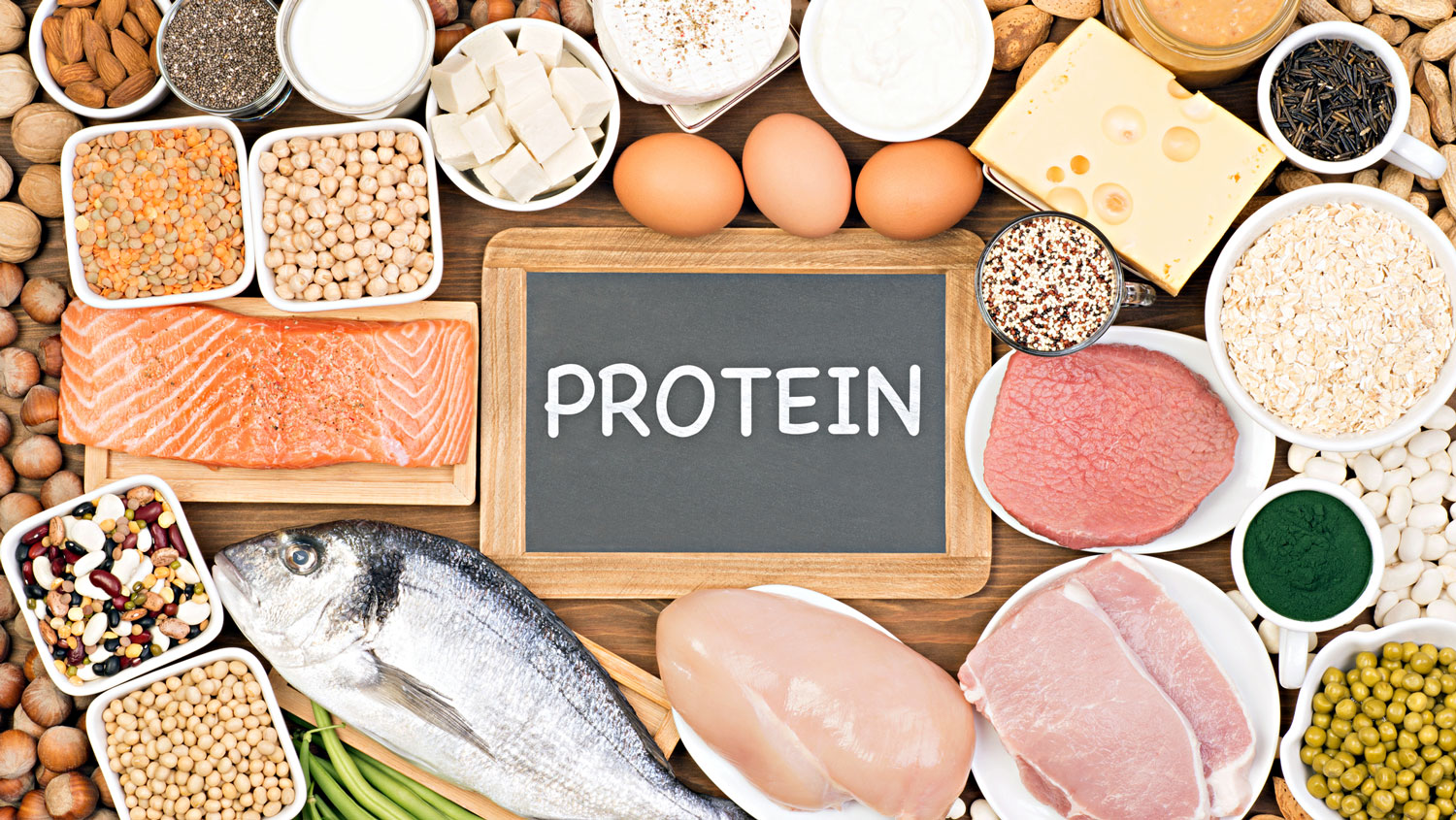
Hands down, protein ranks as the most popular macronutrient, muscling out fat and carbs for the top spot.
Though protein has a number of roles in the body beyond building muscle, it can be hard to distinguish protein facts from myths.
For science-based nutrition information about protein, we spoke with April Fogleman, an associate professor in NC State University’s Department of Food, Bioprocessing and Nutrition Sciences. Fogleman teaches nutrition courses at NC State, including Public Health Nutrition, Intro to Sports Nutrition and others. She’s also a registered dietitian who consults with a handful of clients.
We asked Fogleman to give us a tutorial in Protein 101.
What is protein’s role in our bodies?
Protein does a lot of things. It’s important for structure and tissue building, so it helps with muscles, skin, organs, hair, nails and connective tissue. Enzymes are proteins, and so we need to have protein to have enzymes, as well as hormones and antibodies. So protein helps with our immune system. Hemoglobin is a protein that transports oxygen in our body, and lipoproteins help transport cholesterol and fats. Albumin is a protein that helps maintain fluid balance.
Protein also provides 4 calories per gram that you eat. So it provides energy, but that’s not supposed to be its number one role.
How much protein do we need?
In a nutshell, the answer to this question is, it really depends on your stage of life and how active you are. I factor in exercise type and intensity, age, and caloric and weight loss goals.
The 2025-2030 Dietary Guidelines for Americans, released on Jan. 7, 2026, encourage protein intake of 1.2-1.6 grams per kilogram of body weight per day. However, the Dietary Reference Intake is still set at 0.8 grams per kilogram of body weight per day, based on reports from the Food and Nutrition Board of the National Academies of Sciences, Engineering and Medicine.
So 0.8 grams of protein per kilogram of body weight per day is really going to help you make sure you’re not in a deficiency state. But most Americans consume more than 1 gram per kilogram of body weight per day.
Athletes need more protein, and it varies depending on what kind of athlete you are. Endurance athletes like long-distance cyclists or long-distance runners need more than 0.8 grams per kilogram per day. But they don’t really need as much as a power athlete, like somebody who is intensely weightlifting. In general, athletes, I would say, need between 1 to 2 grams per kilogram of protein per day. And if you’re extremely active, you would be on the high end of that, closer to 2.
Older adults also need more protein, probably between 1 and 2 grams per kilogram per day of protein, because they’re losing muscle mass more than when they were younger.
During pregnancy and lactation, you also need more protein. And people who are trying to lose weight need more protein. If somebody is losing weight, it’s important to consider protein quality and source.
Is there such a thing as too much protein?
Yes. I do Crossfit, and if you listen to the gym culture, it might not seem like it’s possible to consume too much protein. But if you overeat any macronutrient relative to your energy expenditure, you will gain weight. So to some extent, we need more protein than the RDA, but we can get too much, and we can gain weight because of the excess calories. So we do have to be careful about it.
The other caution is that for somebody who has existing kidney disease, we don’t want them to have a high-protein diet. So there can be exceptions to the protein recommendations based on medical needs.
Can you give a breakdown of what meeting the RDA looks like in terms of the foods a person would eat during a day?
Let’s say I’m working with a 150-pound, or 68-kilogram, person who’s active, who works out regularly. To supply 1.5 grams of protein per kilogram of body weight, the daily intake would be 102 grams. I’d round that to 100 and divide it by five servings. If you have three meals and two snacks, that would be about 20 grams of protein per meal or snack.
Now, not everybody is going to eat 20 grams of protein for a snack, but likely they’ll have more of it at a meal. So I would say 20 to 30 grams at breakfast, lunch and dinner, and then 5 to 10 for each snack.
That protein source could be a 4-ounce portion of lean meat, chicken breast, salmon, eggs, or a low-fat dairy product, or beans, lentils, tofu or nuts.
Does it matter where we get our protein? Are there differences in meat versus plant-based proteins or a protein powder or bar?
Meat and dairy are going to be complete proteins that contain all of the essential amino acids. Plant proteins are typically not complete proteins — soy is — but typically plant proteins are not complete. That’s OK. If somebody is a vegan or a vegetarian, they can have a perfectly healthful diet in terms of protein by combining proteins. That concept is called complementary proteins. For example, taking proteins like whole wheat bread and peanut butter, putting them together and you have a complete protein.
A protein powder or protein bar can be really useful if people are having a hard time meeting their protein needs through whole foods, meaning actual foods versus supplements. So if you do have somebody who is a vegetarian and they are looking for plant-based protein sources, a powder can be a good idea. I have a patient who is allergic to dairy, so she can’t have yogurt, cheese or milk. For her, having a plant-based protein shake is helpful. Or if you can’t have yogurt in your smoothie, which would normally be a great protein, a scoop of protein powder would work.
So definitely there is a role for protein powders and protein bars. But I think where people can get into trouble is when we see the marketing for protein, and we’re like, Oh, it has protein, so it’s healthy. The calories still count. If people don’t actually need that, then they’re just adding extra calories that they don’t need.
Are there any protein myths you’d like to lay to rest?
A popular myth is that you have to consume protein within 30 to 60 minutes after working out. Research is showing that the window of time is actually longer. It could be more like 24 hours. So having carbs and protein together after a workout is really beneficial, but you don’t have to rush to get it. The sooner you can get it, the better, but it’s fine if you wait a little longer.
Another myth is that more protein is always better for building muscles. Once we get beyond about 2 to 2.5 grams per kilogram of body weight per day, you’re not really adding much additional benefit.
There’s a protein myth that high-protein diets damage healthy kidneys. Research has shown that healthy people can tolerate protein intakes of even more than 3.5 grams per kilogram per day for 12 or more months without kidney damage. So it’s really people who have preexisting kidney disease that we need to worry about
- Categories: