A Future on the Fairway
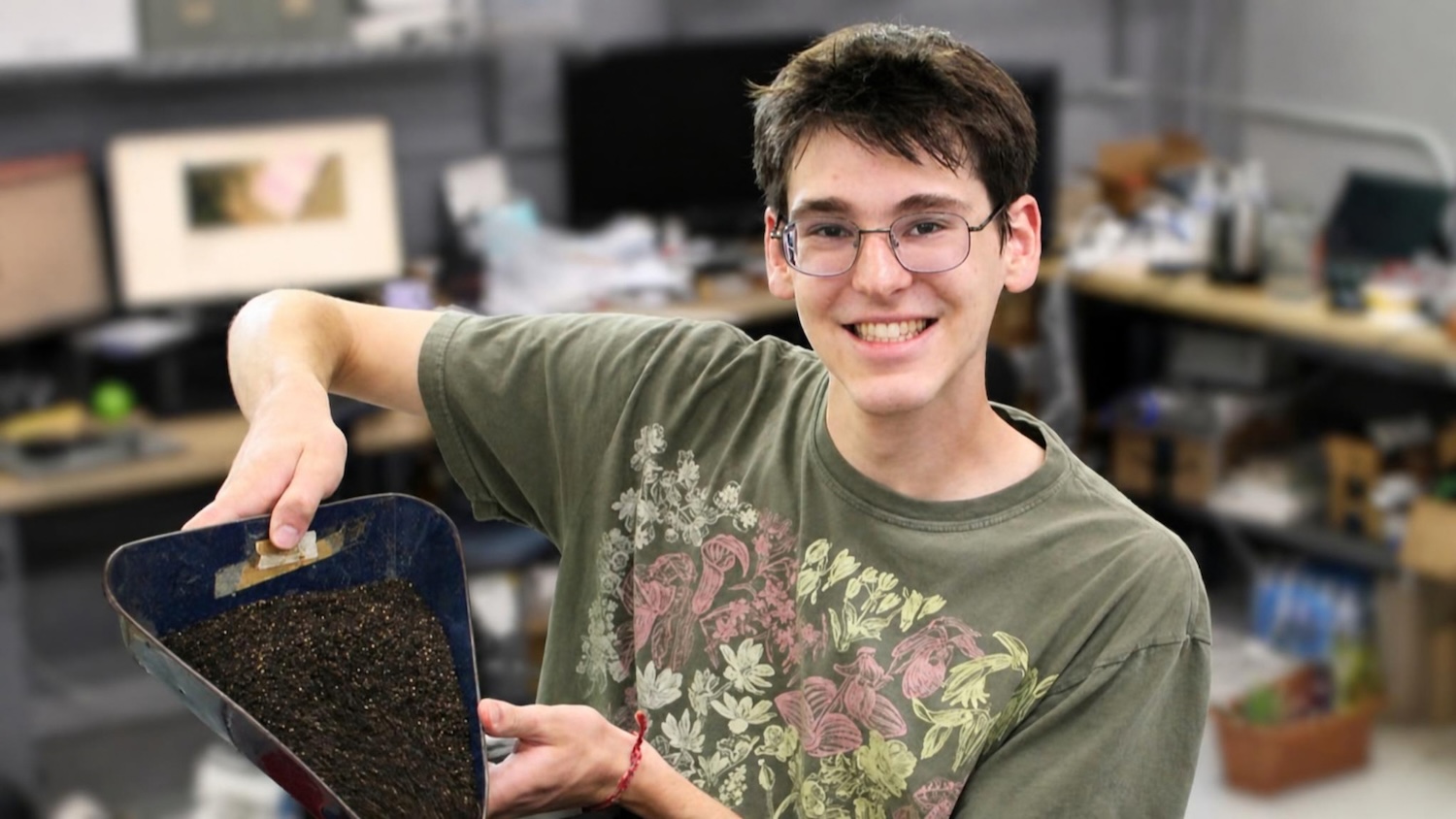
Turfgrass science major Ty High is teed up for a successful career managing golf course greens when he graduates in May.

By Lea Hart
In the spring of 2020, as the world shut down at the start of the COVID-19 pandemic, Ty High, then a high school student in Lexington, North Carolina, was searching for something to do.
He’d always been active and was drawn to early mornings and outdoor work. So when a friend said he could help High get a job at the local Meadowlands Golf Club, he jumped at the opportunity.
Little did he know that decision would tee up the course of his life. In May, High will graduate from NC State University’s College of Agriculture and Life Sciences with a bachelor’s degree in turfgrass science, a minor in agricultural business management, and a dream job that will take him back out on the golf course.
Finding His Calling
There were early signs that High was on the right path. He recalls growing up playing golf and helping his dad and grandfather with yard work.
The golf course job he landed in high school cemented it.
“Getting there in the dark and watching the course come together before sunrise — we put out this piece of art for golfers every single day,” he says.
His boss at Meadowlands was an NC State alum who helped him see the career potential in a turfgrass degree. When he learned NC State was the only university in North Carolina with a turfgrass program that offers two-year and four-year degrees, the decision was made.
Seizing Opportunities
High arrived on campus in Raleigh, already having had hands-on experience. His time as a CALS student helped him understand the science behind what he’d seen on the golf course. Turf and soil science courses connected the classroom to the greens.
CALS faculty members helped along the way. In particular, High’s experiences with Grady Miller, Envu Distinguished Professor of Sustainability, stands out. He found Miller knowledgeable and approachable, and appreciated that Miller continued learning from his students as well.
“We were just two guys talking grass,” High says. “He always had questions for his students because we’d had so many different internship experiences.”
High also served as Turf Club president, using the role to connect students with industry professionals and build his own network which he’ll carry into his career.
“I never felt like I was alone,” he says. “My peers and I leaned on each other when things got tough.”


High built on his experiences with more internships and volunteer opportunities. His first internship at Old Town Club in Winston-Salem, which took place during a full course renovation, changed his outlook on the industry.
“I was able to work on a high-level course, to see how that operates, and then put that together with what I had learned in the classroom,” he says.
It was there that he connected with Bryant Evans, the course’s director of agronomy, who became an influential mentor. Evans pushed his interns to chase every opportunity. That led to High seeking the opportunity to volunteer at Augusta National Golf Course in 2024, where he helped prepare the course for the Masters. High also volunteered at the Players Championship and at Riviera Country Club for the Genesis Invitational.
When Evans moved to Southern Hills Country Club in Tulsa, Oklahoma, he brought High along for two summer internships. There, High played a role in preparing the course for the 124th U.S. Women’s Amateur, something High says felt a little surreal when he got to tell his family to tune in to the championship on television to see his work.
“Work never felt like work there,” High says. “Bryant always looked out for us — it felt like family.”

Looking Ahead and Giving Back
After graduation, High will jump right back on the golf course. He’ll report back to Southern Hills Country Club as an assistant course superintendent in training on May 14, where future opportunities look bright.
The club is undergoing a significant renovation this fall, including the installation of hydronic cooling systems beneath the greens — a technology High estimates is used at fewer than 10 courses in the country. The technology pumps cool air and water under the greens to protect root systems from Oklahoma’s intense summer heat. Southern Hills is also set to host the 2032 PGA Championship, meaning High will help shape a course that will take a national stage.
High hasn’t forgotten the help he’s received along the way and plans to pay that forward. He’s arranging for a student intern to join him in Tulsa this summer, and helped secure a position there for the same friend who got him that first job at Meadowlands years ago.
His own long-term goal is to become a director of agronomy at a top-100 club, ideally on the East Coast — though he’s willing to go anywhere for the opportunity.
“Southern Hills is a stepping stone,” he says. “I plan to learn as much as I possibly can.”
His advice to students coming behind him: take every internship with intention, volunteer whenever you can, and never underestimate the people around you.
“Use your network — your professors, your peers, everyone you meet along the way,” he says. “That network is more powerful than you realize.”