Serving Up Safer Kitchens
As director of research for NC State Extension's Safe Plates program, Lisa Shelley turns insights from everyday food-handling behaviors into research-driven solutions that help protect consumers and strengthen food safety practices.
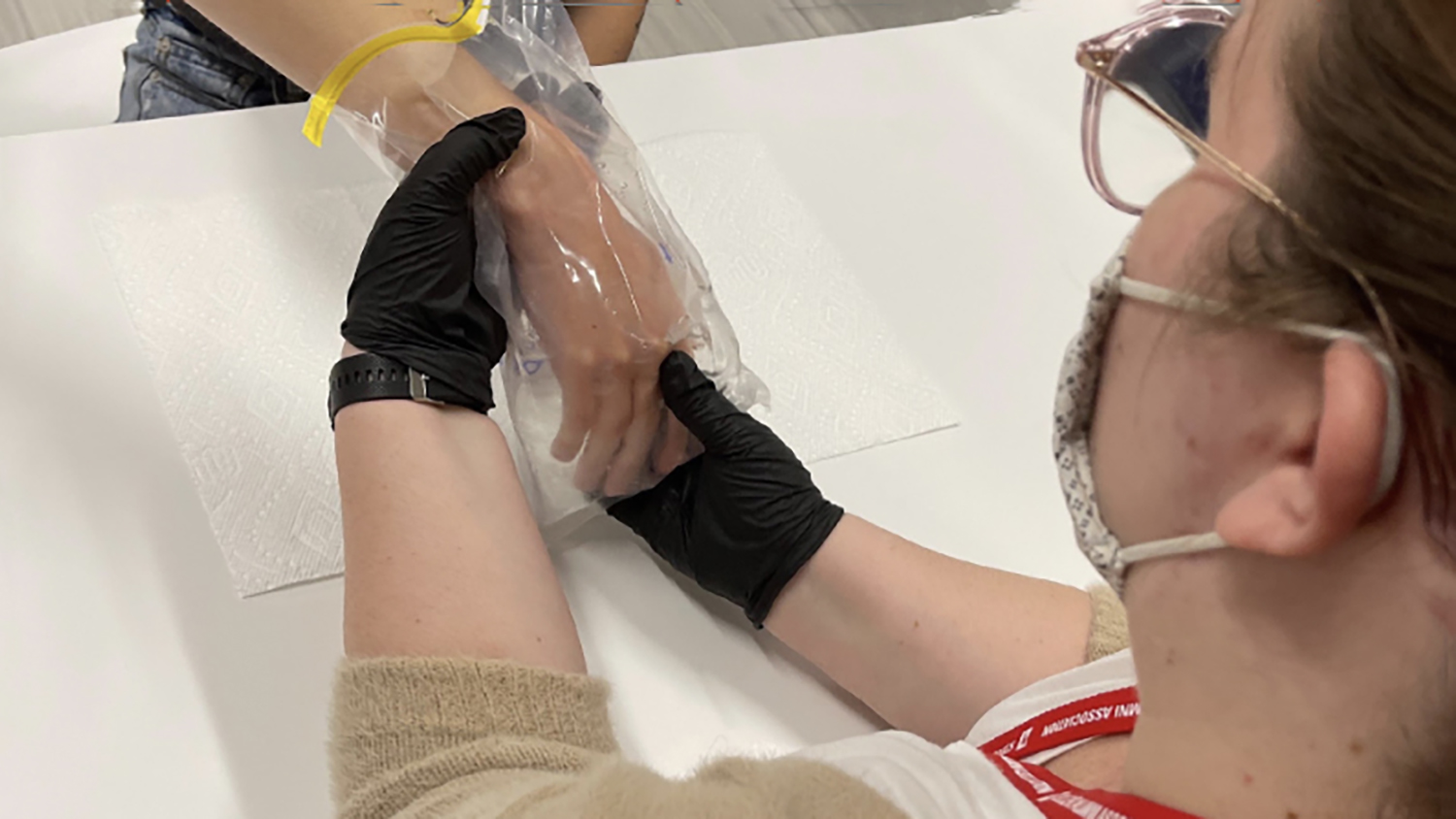
What happens in everyday kitchens can have a lasting impact on public health. From preparing meals at home to maintaining safe food handling practices in restaurants and grocery stores, small actions can make a significant difference in preventing foodborne illness.
For nearly a decade, Lisa Shelley has helped bridge the gap between food safety research and real-world practices through her work with NC State Extension’s Safe Plates program. As director of research, Shelley leads a team dedicated to understanding how people handle food, respond to safety messages and make decisions that affect food safety.
Through observational studies, eye-tracking technology, surveys and focus groups, Shelley and her team examine behaviors that influence food safety. Their findings help shape educational resources, strengthen outreach efforts and provide practical solutions for consumers and food industry professionals.
“Our research on real behaviors guides outreach and the development of effective food safety messaging,” Shelley says.
Understanding Behaviors to Improve Food Safety
One of the most important aspects of Shelley’s work is understanding not just what people do in the kitchen, but why they do it.
A memorable example came during a U.S. Department of Agriculture-funded food safety consumer research project focused on washing raw chicken. The team observed 300 participants preparing meals in test kitchens, using a harmless tracer bacterium to track potential cross-contamination.

While researchers expected contamination to spread primarily across countertops, they discovered that the kitchen sink was a particularly important area of concern. The study also revealed a wide range of chicken-washing practices and motivations, including traditions passed down through generations.
“Understanding the how, and especially the why, gives us a better shot at writing messages that actually change behavior,” Shelley says.
These findings helped reinforce food safety recommendations, including discouraging consumers from washing raw chicken and emphasizing proper cleaning and sanitizing of kitchen sinks.
Making an Impact Beyond the Kitchen
Although much of Shelley’s early research focused on food handling at home, her team’s work has expanded to address food safety challenges in restaurants, grocery stores and other retail environments.
Through industry partnerships, the team investigates practical challenges, including alarm fatigue in temperature monitoring systems and the effectiveness of cleaning and sanitizing tools in retail food service settings. These projects help businesses identify risks and improve everyday food safety practices.
“Foodborne illness can start in ordinary kitchens, so understanding what people really do there is where prevention begins,” Shelley says.
The impact extends throughout North Carolina through NC State Extension. By translating research findings into practical guidance, Safe Plates supports Extension professionals who provide food safety education to individuals, families and communities across the state.

Growing Alongside Safe Plates
When Shelley joined the Department of Agricultural and Human Sciences nearly 10 years ago, Safe Plates was still in its early stages, and plans for the Dinah E. Gore Teaching and Research Kitchens were just beginning.
The team initially relied on a mobile kitchen equipped with eight video cameras, traveling to Extension centers across North Carolina and partner institutions in other states to conduct observational and microbial studies.
As the program expanded, Shelley transitioned from managing individual studies to leading a team investigating a broader range of food safety challenges, including risk assessments, cost-benefit analyses and field studies.
One accomplishment she is particularly proud of is helping the team safely resume in-person research during the COVID-19 pandemic. By collaborating with departments across NC State to establish safety protocols, her team became one of the first research projects on campus to restart, allowing students and researchers to continue their work.
For Shelley, the variety of research and the people she works alongside make her role especially rewarding.
“I love the variety. No two projects are the same, and I’m still surprised by what we find,” Shelley says. “But like any job, it’s really the colleagues who make it amazing. We’ve built a fantastic team over the years.”

Looking Ahead
Shelley is excited to continue expanding Safe Plates’ work in the retail food industry. Her team is preparing to share findings from an eye-tracking study examining how consumers read food recall messages and research evaluating cleaning and sanitizing tools in retail food service.
She also looks forward to mentoring graduate students and supporting the next generation of food safety researchers.
For Shelley, working within the Department of Agricultural and Human Sciences and NC State University’s College of Agriculture and Life Sciences provides an opportunity to connect research with NC State’s land-grant mission of serving communities through education and outreach.
“Because NC State is a land-grant university, our research is expected to reach the people it’s meant to help,” Shelley says. “After almost ten years, working here means getting to do science that’s useful, alongside wonderful research and outreach teams.”
Through her leadership and commitment to understanding real-world behaviors, Shelley continues to advance food safety research that makes a meaningful difference in kitchens, businesses and communities across North Carolina and beyond.


