High-Impact Experience: Getting Research Ready
With support from NC State's Packways High-Impact Experiences initiative, the Biochemistry Undergraduate Research and Training Program now offers students an experience with greater structure and intention.
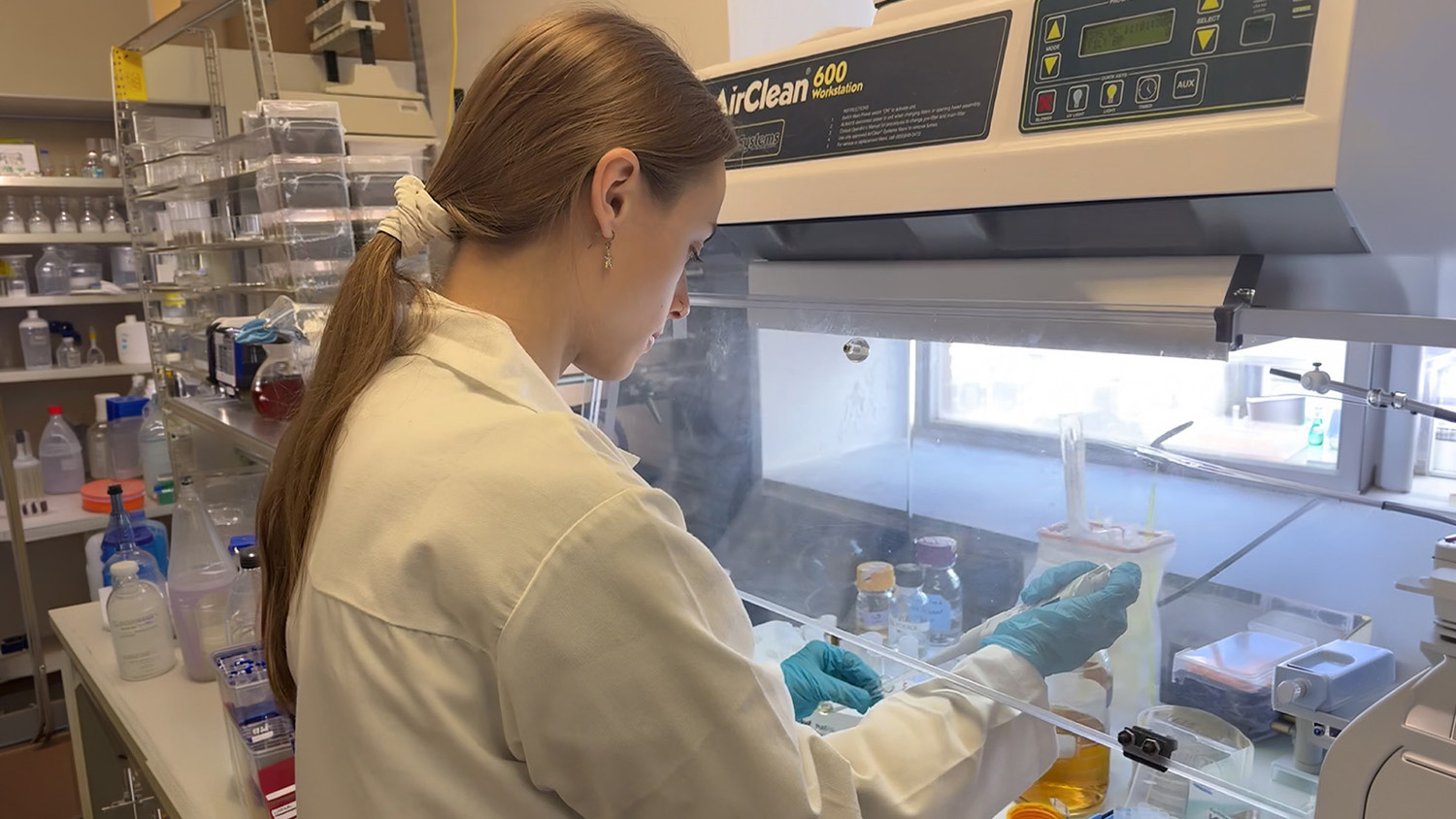
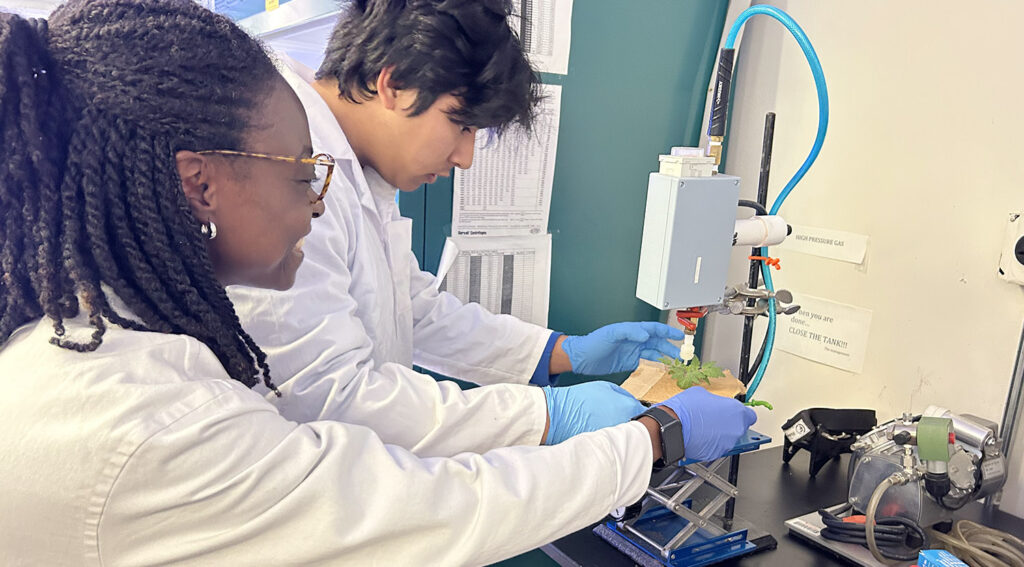
Biochemistry major Raven Smith spent the summer trying to produce a specific protein encoded by a geminivirus, which belongs to a family of plant viruses that can infect a variety of agricultural crops, including corn, tomatoes and cotton.
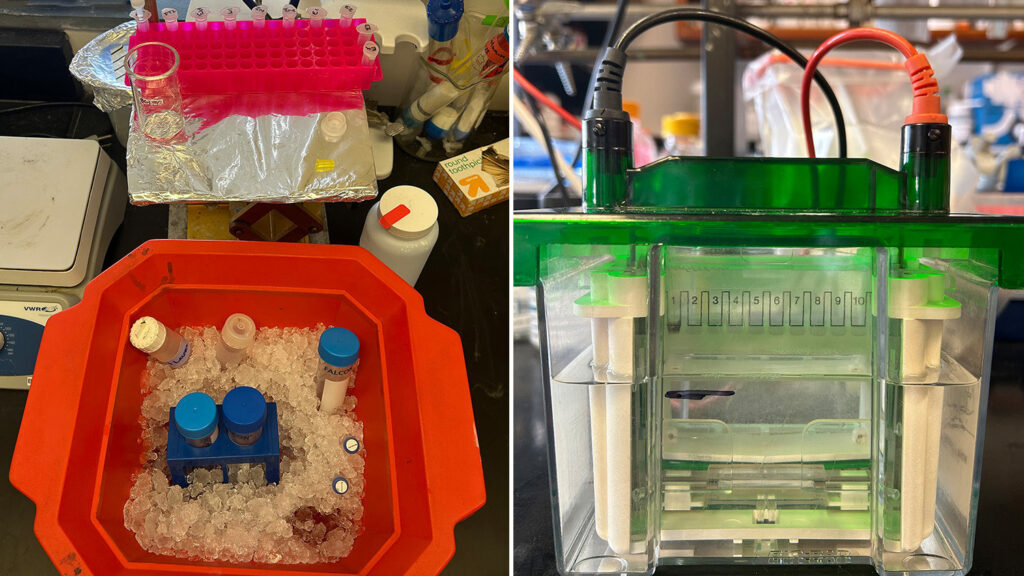
“We would start out with growing the culture and then go through the protein purification processes, then run an SDS PAGE (Sodium Dodecyl Sulfate Polyacrylamide Gel Electrophoresis) gel, and analyze those results,” Smith explains. “And we did that two or three times to try to get better results each time.”
Smith and her lab partner explored methods for producing the protein, which can suppress a plant’s natural defense systems, so researchers can one day get structural images of it to better understand how to combat this group of viruses.
For nearly 15 years, undergraduate students like Smith have gained hands-on research experience in Trino Ascencio-Ibáñez’s lab at NC State University through the Biochemistry Undergraduate Research and Training Program (BURT-P). The program gives students the opportunity to learn everything from pipetting and staining gels to operating high-tech equipment such as flow cytometry and Oxford Nanopore sequencing instruments.
As NC State places greater emphasis on high-impact student experiences, Ascencio-Ibáñez, director of undergraduate programs and undergraduate research in the Department of Molecular and Structural Biochemistry, recently reimagined the BURT-P program to receive the university’s Packways Recognized status.
Part of NC State’s Packways: Learning by Doing high-impact experience initiative, the Packways Recognized program ensures that designated high-impact experiences are intentionally designed to build students’ skills so they’re ready for the workforce or graduate education.
“It makes experiences more structured, more focused and more intentional,” Ascencio-Ibáñez says of the Packways Recognized certification process.
And that’s the point, says Rebecca Sanchez, director of the Packways High-Impact Experiences program.
“Many of our students are doing incredible work applying what they’re learning. The goal of Packways Recognized high-impact experiences is to make sure those experiences are high-impact by design,” Sanchez says. “When mentorship, immersive learning and structured reflection become integral parts of the experience, students leave with not just skills but the ability to explain what they learned and connect it to who they want to become professionally. BURT-P is a great example of what’s possible when a strong experience becomes an intentionally designed high-impact experience.”
Lab Equipped
Driven by a passion for empowering students, Ascencio-Ibáñez has always run the BURT-P program with a focus on preparing undergraduate students for science-driven careers, enabling them to successfully navigate experiments and protocols in industry or academic labs.
The Packways Recognized rubric outlined a path for him to offer more avenues for students to collaborate and reflect on their work in the lab. The rubric requires designated high-impact experiences – which can include study abroad experiences, courses, internships or programs – to have six essential elements:
- Sustained over at least a week to enable deep engagement, meaningful learning and relationship building
- Immersive learning experiences characterized by deep engagement in real-world contexts, authentic challenge and responsibility for outcomes
- Mentored or highly collaborative, enabling feedback and relationship development
- Designed to facilitate student connection to and foster connections within the experience
- Intentional about integrating structured critical reflection to guide students to articulate the value/impact of the experience, connecting it to their broader learning, and linking it with their professional readiness
- Opportunities to communicate knowledge, competence and takeaways
To meet those requirements, Ascencio-Ibáñez has implemented lab teams, regular lab meetings, a journal club for students to present articles from scientific journals, and a reflection component for students to share insights and provide feedback.
“Now it is a much more complete experience,” he says.
A Community of Practice
Ascencio-Ibáñez rolled out the new program structure for the 2026 summer cohort. For Smith, who first participated in the 2025 summer BURT-P program and continued throughout the 2025-26 academic year, the new elements made her time in the lab this summer much more impactful and gave returning students like herself a chance to mentor those new to lab work.
“As a team lead, that made me feel kind of like I do belong here and that I know what I’m doing,” says Smith, who plans to pursue her Ph.D. in biochemistry and hopes to one day teach undergraduate students in her own lab. “I was excited to get to teach someone else, and that experience has definitely been key in giving me that confidence that I feel comfortable in a lab and that I feel comfortable teaching and helping others.”
Samarth Vastrad, who joined the BURT-P program in the spring of 2025, participated in the summer version of the program for the first time this year and found the changes opened the door to more discussion and collaboration.
“I enjoyed having meetings weekly where we would all talk about where we were in our research as well as taking a deep dive into recent research articles relevant to our topics,” says Vastrad, whose three-person research team worked on elements of genome silencing through the use of a virus.
“Overall, I learned so much, and I definitely improved my skills with teaching others and also communication. There is always room to learn more, and opportunities like this are a perfect way to do it.”