BeeMORE Program Kept Research Buzzing All Summer
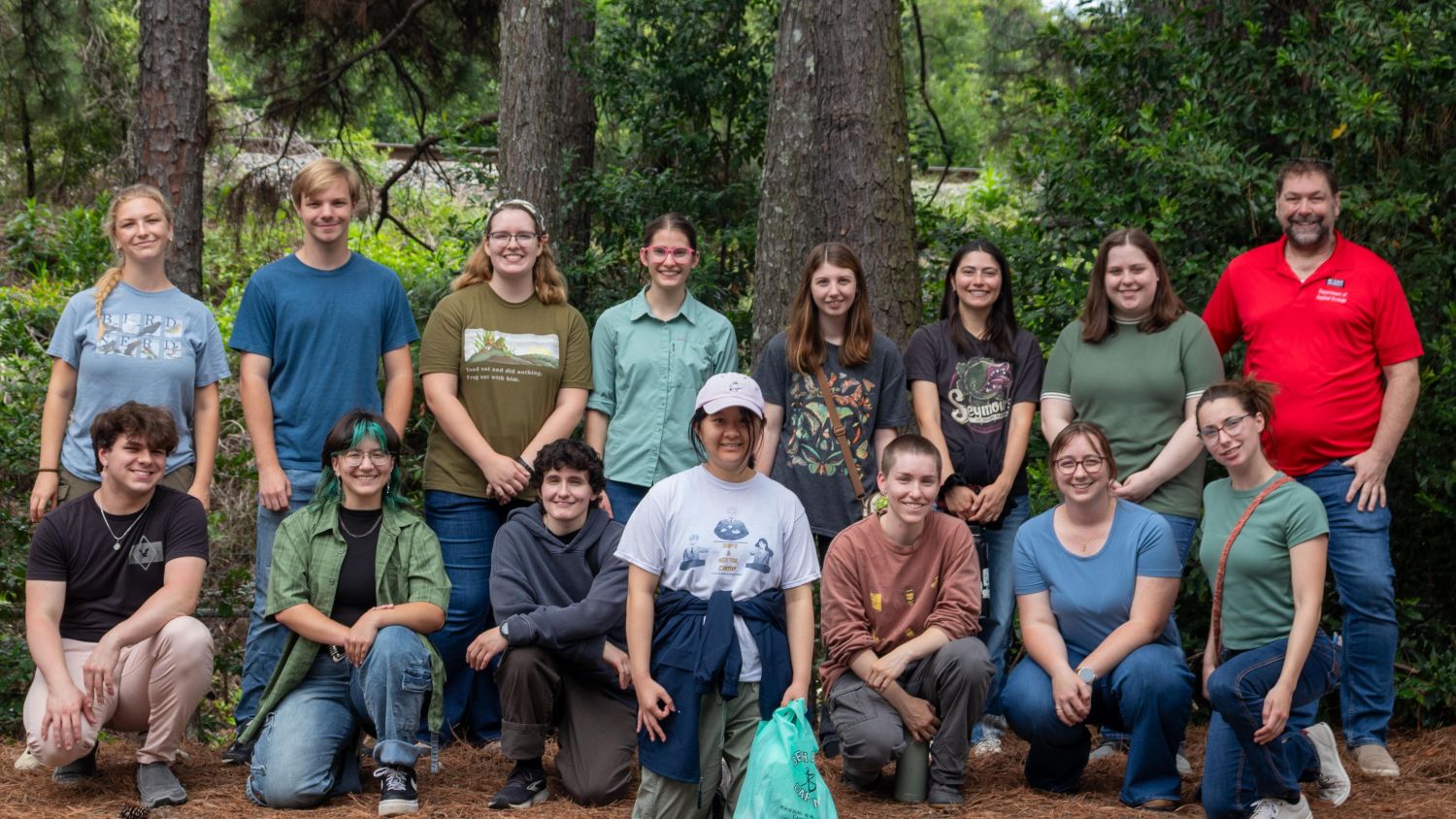
Pollinator research labs across NC State University’s College of Agriculture and Life Sciences were buzzing this summer, as 12 undergraduate students from colleges across the country teamed up with faculty, staff and graduate student mentors for BeeMORE (Bees and Microbes in Organized Research Experiences), a 10-week summer research experience.
Spanning four departments across CALS and the College of Sciences, the program is highly interdisciplinary and collaborative.
“One of the real strengths of the program is that each participating student gets paired with a faculty mentor and a research supervisor, like a graduate student or a postdoc, with whom they work directly,” says David Tarpy, a University Faculty Scholar specializing in apiculture and project director of the BeeMORE program. “That way, students are able to hit the ground running right when they arrive on campus.”
Funded for 10 years by the U.S.Department of Agriculture-National Institute of Food and Agriculture, BeeMORE provides students the opportunity to explore a wide range of science topics related to bees, from microbiology to landscape ecology. While the program is broad, students work with their mentors to create a tailored experience. Earlier this year, the BeeMORE program received the 2026 Spirit of the Land-Grant Mission Award from the College of Agriculture and Life Sciences for work that exemplifies the land-grant mission through impactful projects or programs in discovery, engagement and learning.
“I am always impressed by the breadth of research projects, ranging from the obvious, like honey bee and bumble bee diseases, to the unexpected, like yeasts that naturally ferment the pollen of carpenter bees, to the unorthodox, like microbes in beehive pests that can help digest microplastics,” Tarpy says.
“Some students join their mentors on an ongoing research project, while other students are given a project specific to them,” explains Claudia Roller, a post-baccalaureate lab technician with the program. “There is a wide variety of opportunities.”
While the program focuses heavily on research, BeeMORE students also participate in professional development opportunities throughout the summer that expose them to career paths related to pollinator science. For example, students met with Extension agents at the Forsyth County Extension Office to learn about possible careers in extension, presented research to hundreds of attendees at the North Carolina State Beekeepers Association meeting, and toured Greenlight Biosciences, a private Research Triangle Park company that developed a product called Norroa that combats destructive varroa mites without using chemicals.
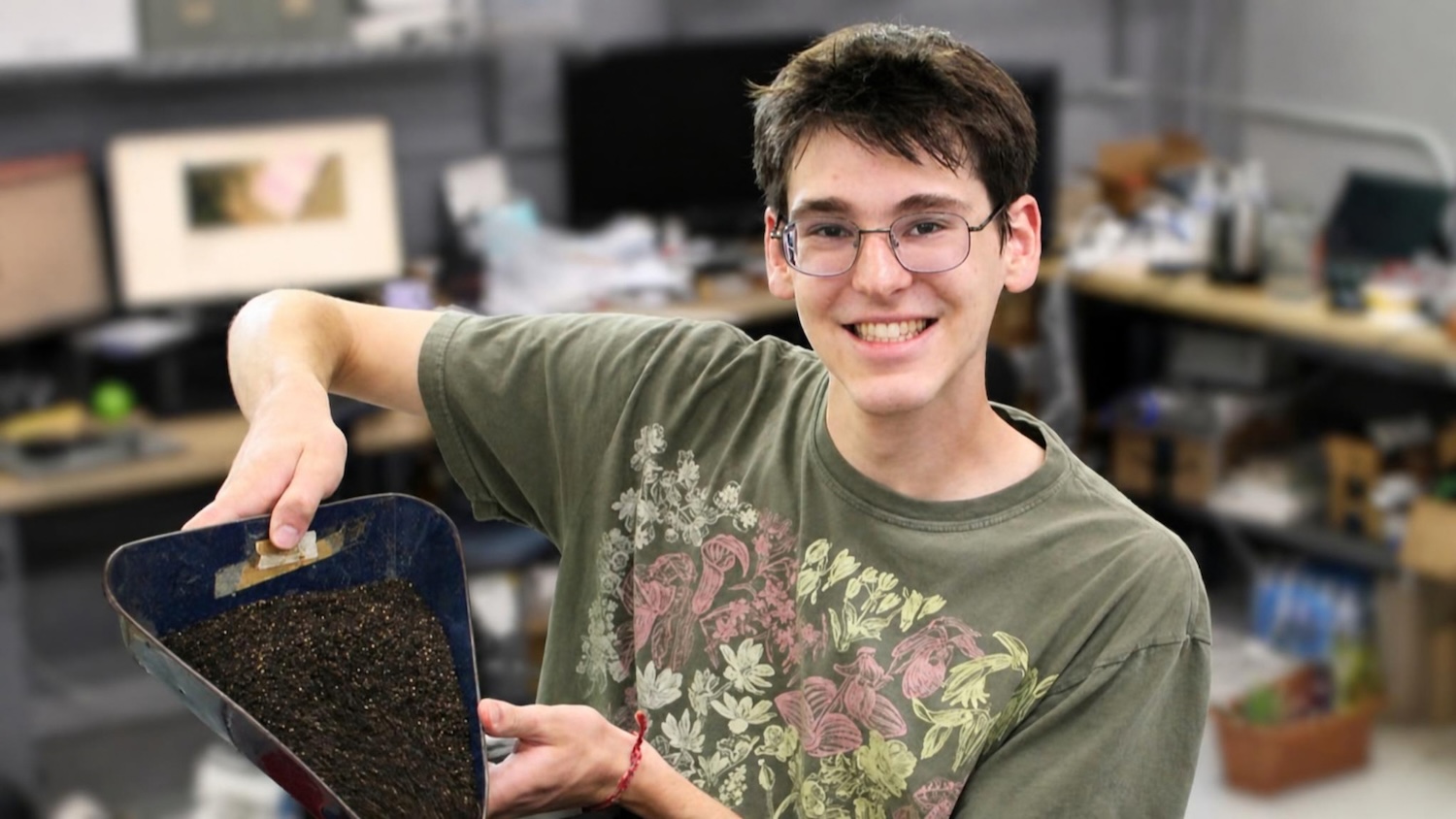
“What I enjoyed most about BeeMORE was the variety of experiences it provided,” says Lucas Hall, an NC State student majoring in agroecology, whose BeeMORE research focused on automated bioacoustic monitoring as a way to passively track pollinator activity. “I was able to experience field research, laboratory work, data analysis, extension and academia.”
At the end of the summer, every BeeMORE student presented their research at the Summer Undergraduate Research & Creativity Symposium. Some students will continue working with their NC State mentors to publish their data in a peer-reviewed journal. All will return to their respective schools knowing a lot more about bees.
Meet the 2026 BeeMORE Student Researchers
Dinela Dedic

- Student: Dinela Dedic, Dickinson College
- Mentors: Hannah Levenson & Bradley Metz
Majoring in environmental science with a certificate in food studies, Dinela Dedic was drawn to the BeeMORE program due to her interest in earth science and community impact. “In addition to my love for insects, both domesticated and wild bees contribute directly to sustainable food systems by providing essential pollination services,” Dedic explains.
This summer, Dedic explored how flooding impacts plant-pollinator interactions following Hurricane Helene, which washed away farmland and pollinator habitats in western North Carolina. Dedic collected bees, flowers and pollen across eight sites that experienced varying degrees of flooding to analyze flower visits alongside bee diversity and abundance. By comparing these findings to historical data, the project aims to inform how severe weather influences bee-flower interactions and help prioritize habitat restoration during recovery.
The experience with BeeMORE reinforced Dedic’s dedication to ecological research. She shares “Being able to work in an IPM (integrated pest management) Extension lab this summer and having the opportunity to tour the GreenLight Biosciences facility in Durham has affirmed that I would like to continue studying ecology in some way as my career develops,” she shares.
Dedic is currently applying for a Fulbright program in Bosnia & Herzegovina and plans to continue exploring opportunities in Agriculture Extension labs before attending graduate school.
Lucas Hall
- Student: Lucas Hall, NC State
- Mentors: Hannah Levenson and Bradley Metz
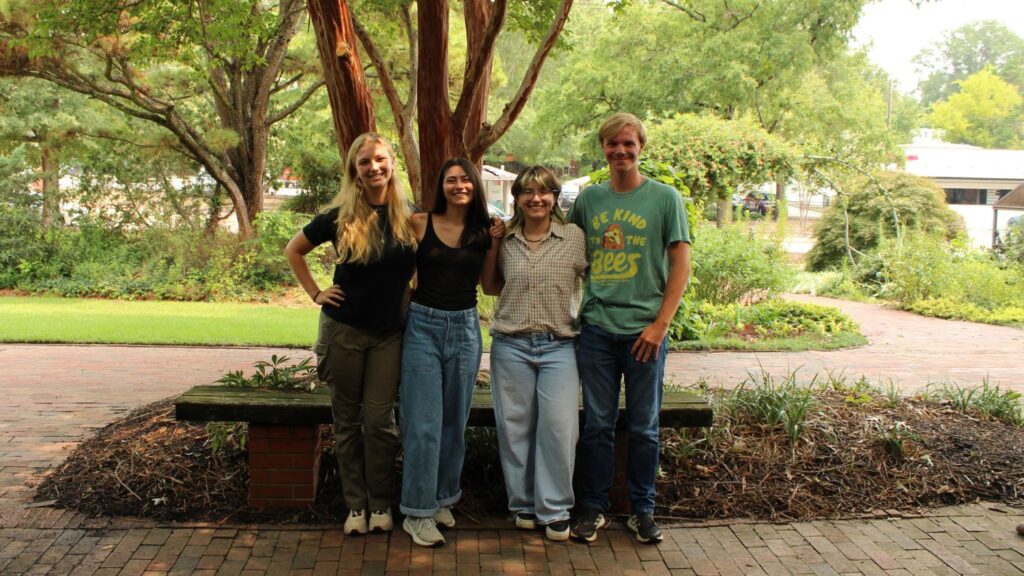
Driven by a long-standing interest in entomology and its role in agriculture, Lucas Hall joined the BeeMORE program to expand beyond pest management research and explore pollinator conservation. “BeeMORE gave me the chance to broaden my understanding of entomology while contributing to research that supports pollinator conservation and sustainable agriculture,” shares Hall.
Hall’s summer project investigated whether an automated bioacoustic monitoring program called BuzzDetect can passively track pollinator activity. By comparing recorded pollinator buzzes against insects captured through traditional hand-net sampling, the research evaluated whether automated acoustic monitoring can serve as a reliable proxy for conventional field methods.
Throughout the summer, Hall valued the broad exposure to field research, lab work, data analysis, extension and academia. The experience also provided a deeper appreciation for the rigor of the scientific process. “Research involves far more than collecting data; it requires constant troubleshooting, refining methods, validating results, and adapting when things don’t go as planned,” Hall says.
The BeeMORE program confirmed Hall’s ambition to build a career in entomology. Moving forward, Hall plans to continue working in entomology research labs, gain additional hands-on experience and eventually pursue graduate school to support pollinator research and conservation.
Julia Kenefick
- Student: Julia Kenefick, NC State
- Mentors: Claire Gordy and Carlos Goller
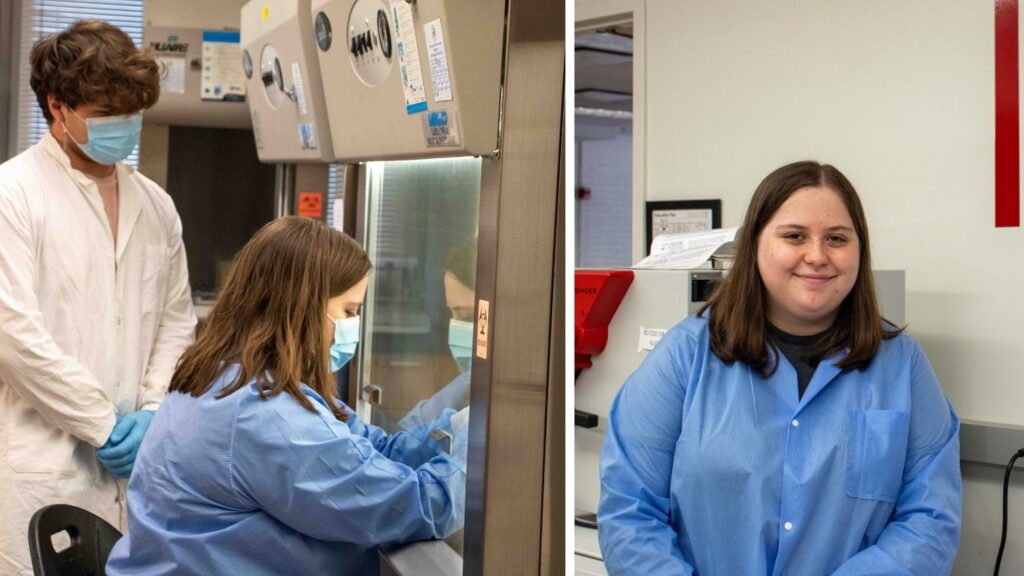
Julia Kenefick is no stranger to NC State or the aspects of biology that are too small to see with the naked eye. She was drawn to the program by her passion for genetics and desire to have a hands-on role in research that benefits the environment.
Kenefick’s project focuses not on honeybees themselves, but on one of their pests, waxworms. “Our project is focused on the microbes found in the digestive tract of waxworms. It has been shown that both waxworms and their microbes in isolation have the ability to digest certain plastics,” explains Kenefick. Her project is narrowing down which genes might be involved in the digestive process across these different microbes.
Reflecting on her summer, Kenefick found BeeMORE helped solidify her future career goals. “BeeMORE proved to me that I do enjoy the trial, error, and small wins of research, and because of that I am planning to move on to graduate school and focus on research longer term.”
Keira Overmann

- Student: Keira Overmann, University of Virginia
- Mentors: Hannah Levenson
Keira Overmann’s passion for agriculture’s role within larger ecosystems and anthropogenic interactions with nature led her to the BeeMORE program for the opportunity to work at NC State’s Specialty Crop Integrated Pest and Pollinator Management lab.
Overmann’s research investigates how different land-use types, spanning farms, solar facilities and natural habitats, determine floral resources and influence bee communities. “My research essentially asks: How do different types of land-uses determine floral resources and thereby influence bee communities?” shared Overmann. By measuring floral diversity, abundance and bloom stages alongside bee metrics collected using pan-traps and sweep-netting, Overmann hopes to uncover trends that highlight which environments best protect bee health.
Reflecting on her summer experience, Overmann appreciated the variety offered within the program. “My project required that I learn to identify bees, plants, and pollen, which, in turn, has not only become an awesome skill, but has also familiarized me and connected me with the surrounding world,” Overmann says.
The BeeMORE program also provided valuable clarity on future career directions. She shared, “More than anything, BeeMORE has given me the opportunity to try out academic research before making long-term career decisions.” Moving forward, Overmann aims to pursue extension work, bridging the gap between scientific research and the communities it serves.
Lauren Petronella

- Student: Lauren Petronella, The Ohio State University
- Mentors: Molly Carlson and David Tarpy
Interested in insects since childhood, Lauren Petronella’s fascination with honey bees started after a 4-H beekeeping project. Complementing her research interests in honey bee disease and genetics, Petronella’s BeeMORE research project aimed to understand whether worker attendance on queen cages in foster colonies predicts queen health and reproductive and morphological quality.
“Seeing my entire research project grow from start to finish was fascinating, because through each phase I was constantly learning new things,” Petronella says. “I’ve learned things from data collection, field practices, molecular techniques and even a little bit of coding.”
A core aspect of the BeeMORE program is mentorship, and graduate student Molly Carlson trained Petronella in molecular techniques, including RNA extraction and qPCR.
“I’ve definitely gained a sense of accomplishment having conducted research in a field that I have always dreamed of going into,” Petronella says.
Victoria Robilliard
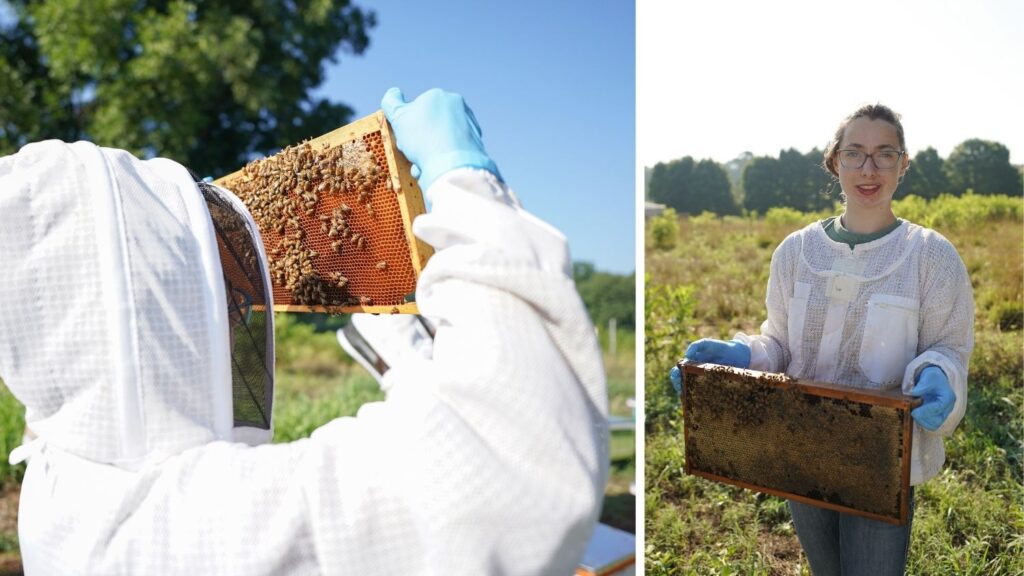
- Student: Victoria Robilliard, Southwest Minnesota State University
- Mentors: Claudia Roller and David Tarpy
As an avid beekeeper and biology student, Victoria Robillard saw BeeMORE as the perfect opportunity to deepen her understanding of both subjects.
Her research project investigated the influence of packaging on ovary development in honey bees. By using queen and brood pheromones, Robillard sought to inhibit ovary development. This novel study looked at ovary activation in worker bees as the primary cause of supersedure, or queen replacement.
Robillard learned how to dissect bees, make pheromones and identify different types of bees. “I enjoyed the hands-on experience paired with one-on-one guidance,” she says.
Annie Sahd

- Student: Annie Sahd, Millersville University of Pennsylvania
- Mentors: Patrick Gallagher, Raymann Lab
With an interest in studying microbial ecology and ecosystem function, the BeeMORE program was a perfect fit for Annie Sahd. Her project looked at whether diet or microbial exposure affects the microbiome and the development of queen honey bees. She enjoys the research process and the opportunity to expand her molecular biology skillset and learn more about microbial communities.
The opportunity to work with students from a wide array of backgrounds was impactful to Sahd. “I had fun interacting with all of the other students in the BeeMORE program,” she says. “We have become close friends and it is great to hear about the diversity of projects that people are working on, and to learn about what other people my age are planning to do once they are done with undergrad.
“The BeeMORE program has given me a taste of both laboratory and, to a lesser extent, field research, which is helpful to me because I am still trying to determine what type of research I want to go into in the future.”
Ryan Skidmore
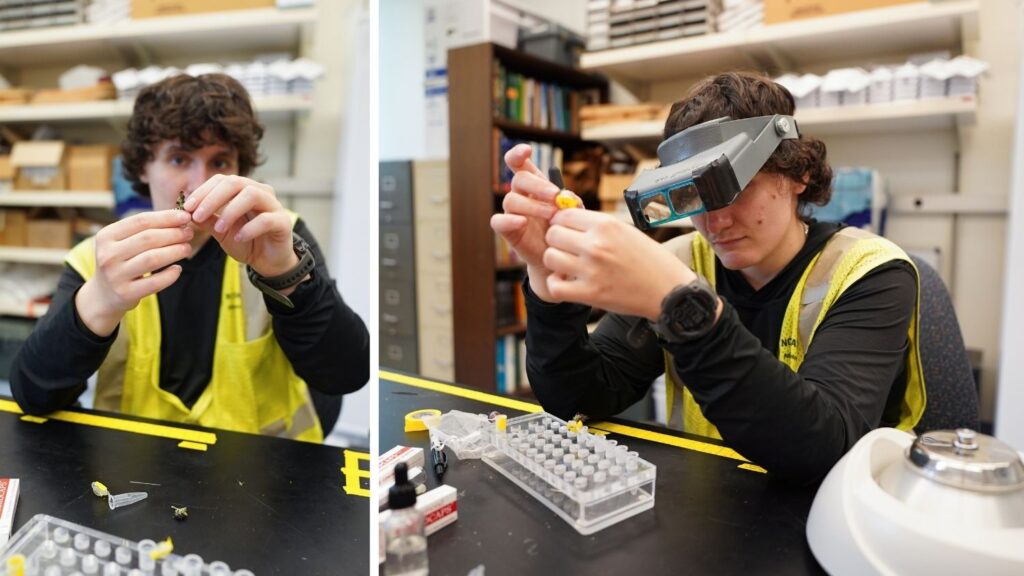
- Student: Ryan Skidmore, State University of New York
- Mentors: Gwen Kirschke and Elsa Youngsteadt
As cool-blooded animals, simply feeding from flowers can change a bee’s internal body temperature. For his BeeMORE research project, Ryan Skidmore wanted to know if bees preferred cooler nectar when outside temperatures were hot.
Skidmore’s interest in science communication drew him to the Youngsteadt Lab, where he designed outreach content as part of his research project. He now adds a PhD to his career goals.
“I have learned a ton about plant anatomy,” Skidmore says. “I’ve also learned how much I enjoy creating scientific protocols and trusting the process to see what results they bring.”
Jobie Smith

- Student: Jobie Smith, University of Northern Iowa
- Mentors: Claire Gordy and Carlos Goller
A double major in biology and biochemistry, Jobie Smith is passionate about endocrinology and neuroscience research. “I was led to the BeeMORE program with its focus on microbiology research and lab-based science,” Smith shares. “I greatly enjoy the freeing environment of the lab and the encouragement of independent thought.”
Smith’s project also focuses on waxworms and their associated microbes. “My project is the cultivation of plastic-degrading abilities in microorganisms found within the guts of waxworm larvae, a wax-eating pest of beehives.”
Smith is looking at different growth conditions and how they impact microbial growth when the microbes’ only food source is plastic. After completing the BeeMORE program, Smith will continue conducting research at the University of Northern Iowa.
Kiley Smith
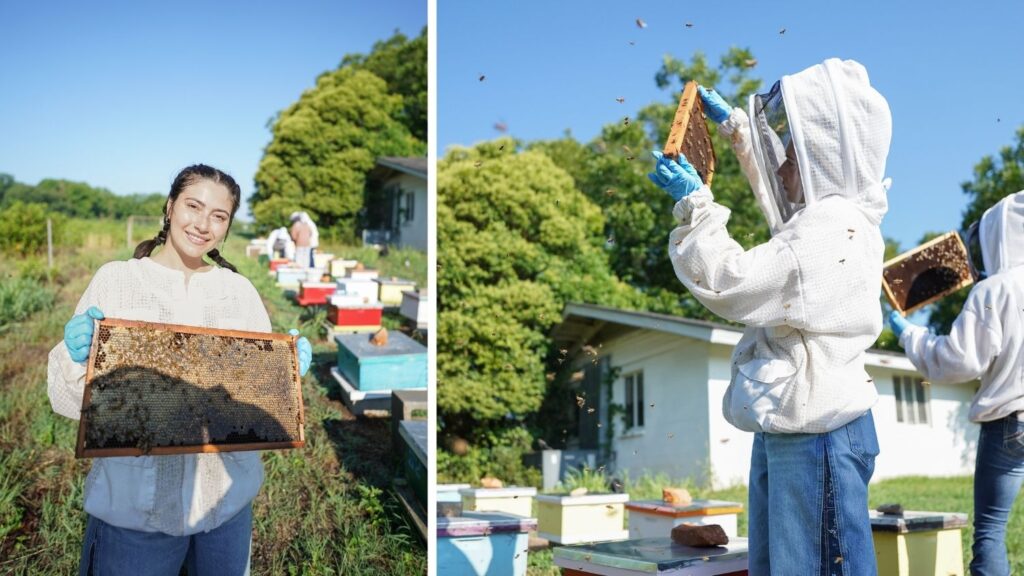
- Student: Kiley Smith, University of Nevada, Reno
- Mentors: Bradley Metz and David Tarpy
Have you ever seen honey bee sperm under a microscope? Kiley Smith has. Her research project explored the potential effects of climate change on male honey bee fecundity (fertility).
“We intended to identify relationships between adult survival under heat stress and morphometrics to their sperm heat resilience,” Smith explains. As an aspiring entomologist, Smith joined BeeMORE to gain valuable lab experience to prepare for graduate school.
Throughout the summer, Smith experienced how biological research can closely align with agriculture. “From this experience, I realized that community outreach is an area I would love to work in,” Smith says.
Gretchen Taylor

- Student: Gretchen Taylor, Earlham College
- Mentor: Layla Jeries, Raymann Lab
Gretchen Taylor found her passion for exploring how living systems work during a microbiology course, and quickly realized she wanted more hands-on training in the field. “I have already spent time shadowing in a clinical setting, but I knew I needed to do more professional work in the other fields that inspire me every day,” Taylor says. “The BeeMORE program perfectly combined my academic curiosity with real-world lab skills.”
Her summer project focused on isolating, growing and characterizing Bifidobacteria and Lactobacilli bacteria found in the honeybee gut. These species had been detected in earlier experiments and Taylor’s work provided a better understanding of their diversity, which could help researchers design better bee probiotics in the future.
After completing the BeeMORE program, Taylor is looking forward to her next steps, “The BeeMORE program has given me the confidence to keep moving forward. I have thoroughly enjoyed my time in the Raymann Lab, and I now know that I want to pursue a career in laboratory science.”
Kayla Zhang
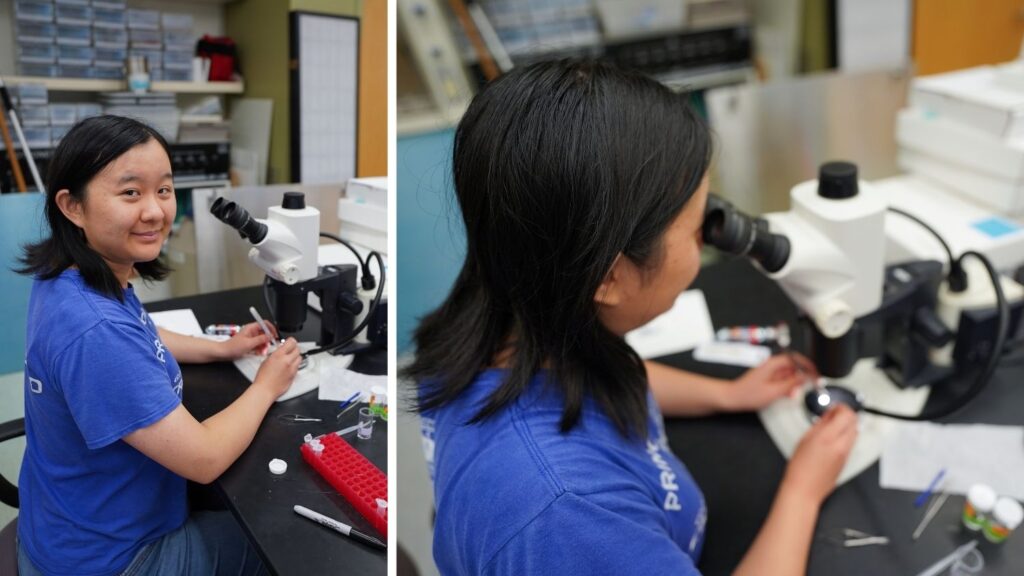
- Student: Kayla Zhang, Brandeis University
- Mentors: Bianca Jimenez and Becky Irwin
Before her BeeMORE experience, Kayla Zhang was interested in entomology but did not have a clear career path. After spending her summer learning from mentors in the Irwin Lab and participating in a variety of professional development experiences, she now sees many opportunities post-graduation.
“Before BeeMORE, I did not have much direction,” Zhang says. “Now, I am thinking of pursuing work out of college, as I know there are many avenues of work when it comes to entomology.”
For her research project, Zhang wanted to know if the gut parasite Crithidia bombi shrank solitary bee ovaries. To find out, leafcutter bees were hatched, infected and dissected. Then, bee ovaries were photographed and measured.
Working closely with leafcutter bees led Zhang to many discoveries. One of her favorite fun facts is that Megachile rotundata have evolved to sting above their heads, with abdomens that curl upward rather than downward.