Planting New Opportunities
A joint internship program between NC State Extension and N.C. Plant Sciences Initiative gave CALS student Nathaniel Rhein hands-on experience with interdisciplinary research.
By Chad Saleska
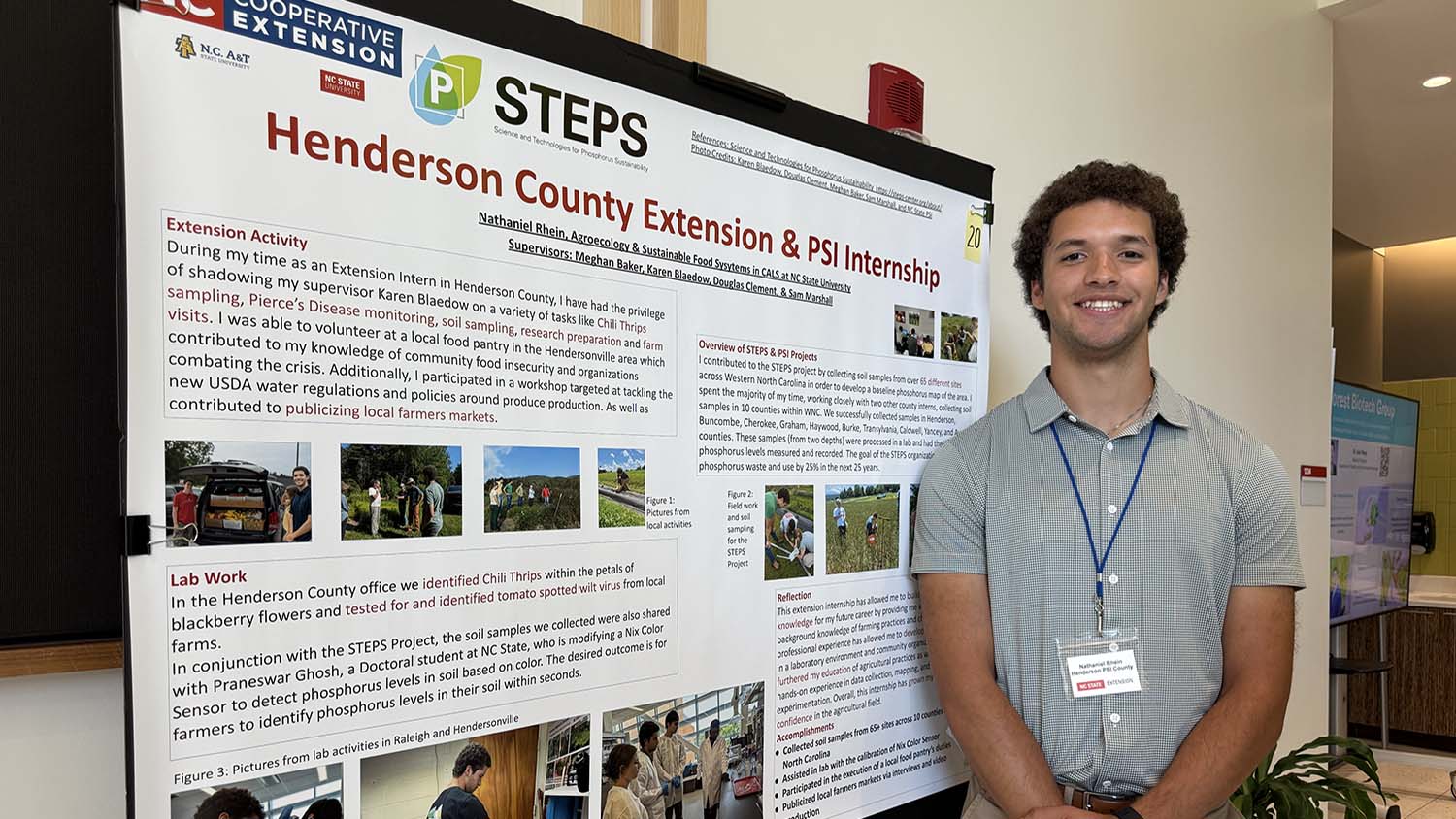
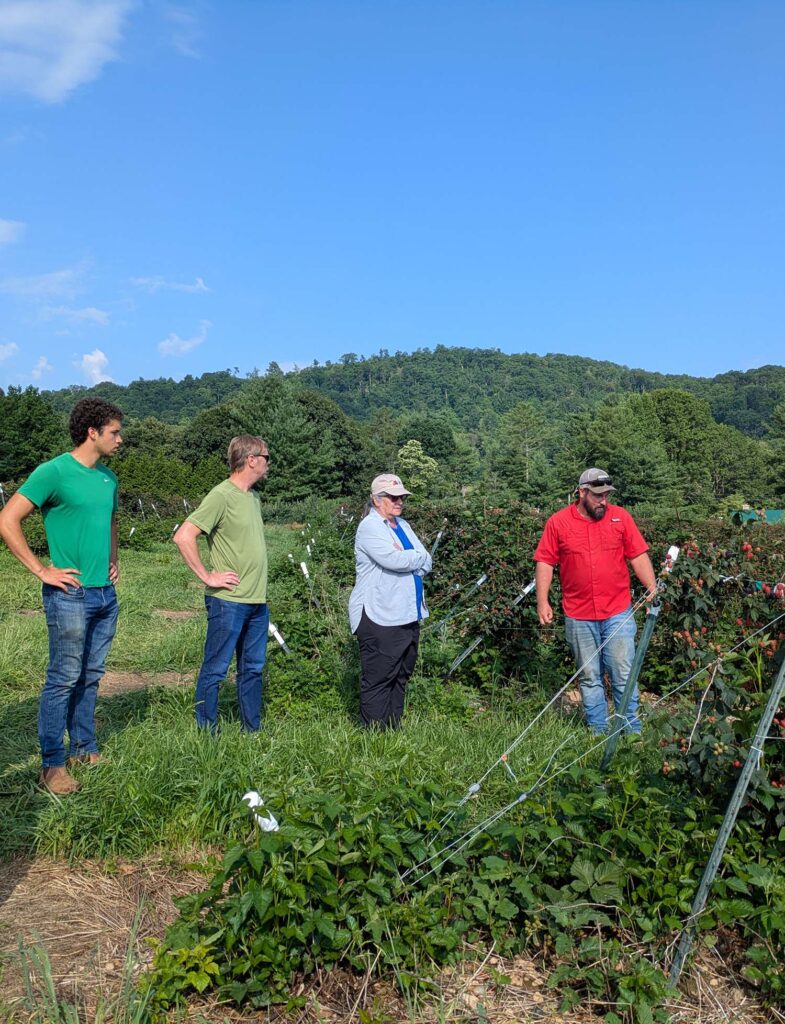
Nathaniel Rhein, a third-year NC State University student, spent his summer taking soil samples from farms, searching for pests at vineyards and picking blackberry flowers.
It was the perfect way for the agroecology and sustainable food systems major in the College of Agriculture and Life Sciences (CALS) to better understand the fruits of his labor. Rhein’s internship was part of a federally funded, collaborative internship program between NC State Extension and the N.C. Plant Sciences Initiative (PSI), offering interns a mentoring opportunity from local Extension experts and PSI faculty researchers.
The internship program landed Rhein at the NC Cooperative Extension Henderson County Center, near his home in Tryon, North Carolina, and focused largely on developing a baseline phosphorus flow map for the Science and Technologies for Phosphorus Sustainability (STEPS) Center, which addresses the challenges of phosphorus sustainability.
“I did things during the internship that I’m now covering in my courses,” Rhein says. “The internship gave me a leg up by being able to understand concepts and, in turn, have a better academic experience.”
Multi-Faceted Roles
Phosphorus sustainability is important because the mineral is a non-renewable resource that plays a critical role in plant growth, and its leach rate changes with soil structure and water events, like the flooding following Hurricane Helene.
Rhein’s team of interns went to 10 counties and took soil samples to identify the phosphorus content to better understand the hurricane’s impact. Rhein made the most of his internship by organizing collection sites and collaborating with his team.
“One of the things I liked about this role was working with the other interns,” Rhein says. “I also liked that it united people from STEPS, PSI and Extension around one common goal.”
In addition, Rhein assisted with a week-long 4-H Agriculture Day Camp and helped detect the presence of harmful insects among blackberries and grapes. According to Rhein, visiting Asheville’s Biltmore Estate vineyard to detect the presence of glassy-winged sharpshooters was a highlight of the experience.
“Something I found interesting was identifying insects at the vineyards that were carrying Pierce’s Disease,” he says. “They have been migrating north, and there are certain counties in North Carolina that have had them.”


Collaboration Leads to Success
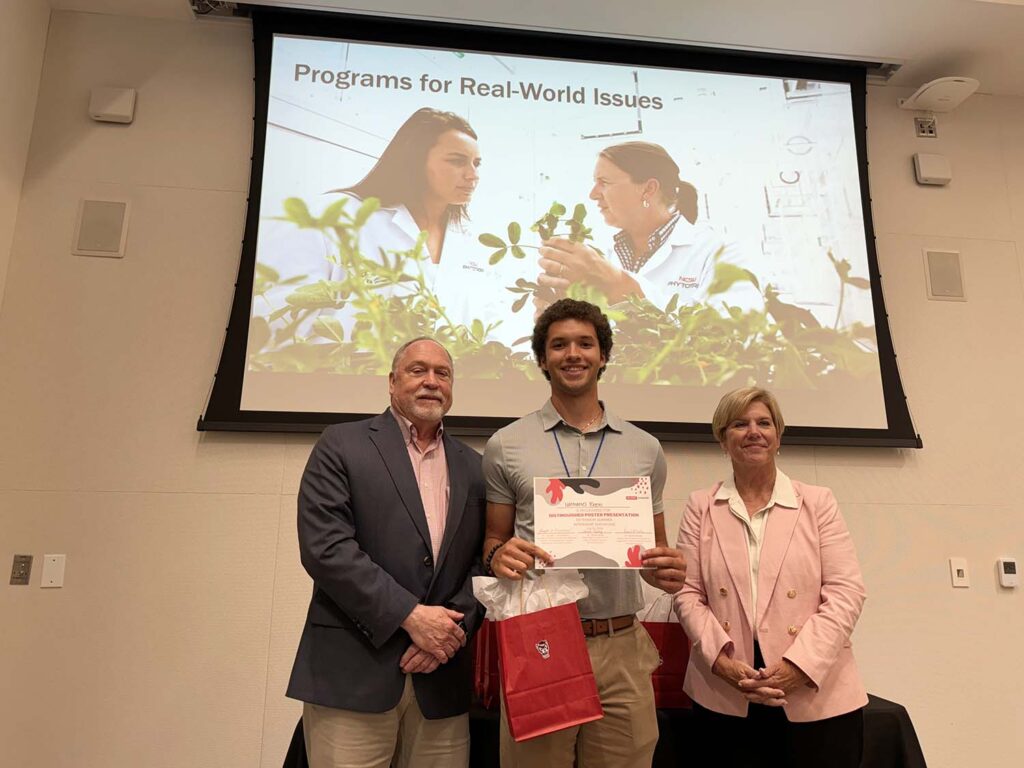
As an Extension horticulture agent in Henderson County, Karen Blaedow has hosted various interns over the years, but few were quite like Rhein.
“I can’t say enough positive things about my experience having Nathaniel as an intern,” Blaedow says. “He was highly motivated and took initiative to organize the collection of site data and samples to update project maps.”
Blaedow appreciates how the PSI project gave the intern team a clear objective and goal, allowing them to have ownership of research with real results and impact.
PSI Program Manager for Education and Extension Outreach Sarah Dinger says the internship program offers students examples of how interdisciplinary work in agriculture can be.
“Nathaniel learned that science is highly collaborative, and novel research starts with those who are willing to partner and think outside the box,” she says. “I hope his time with Extension provided a broader perspective on food systems, and this experience positively influences his career.”
She adds, “All of the students got to interact with growers, labs and researchers from several different disciplines. I hope they see that their contribution had a real impact in advancing science research and tech discovery.”
A Growing Partnership
In 2023, Joseph Donaldson, director of undergraduate programs for the Department of Agricultural and Human Sciences, teamed up with a handful of NC State professionals to build off the success of the NC State Extension Summer Internship Program by starting a collaborative pilot program for internships between Extension and PSI.
“We worked with nine county Extension directors, nine PSI research faculty mentors, and nine interns,” says Donaldson, who anticipates the program will host 10 internships annually for the next four years. “We were seeking to empower college students with valuable, practical experiences to help them bridge college and career while strengthening plant sciences.”
The success of the 2025 cohort will help pave the way for the next group of interns in the summer of 2026. The application period for the next cohort will open in January with a deadline of mid-to-late February. Funding for the program comes from the Agriculture and Food Research Initiative of the United States Department of Agriculture’s National Institute of Food and Agriculture (USDA NIFA).

“This program has a bright future,” Donaldson says. “It fulfills an important need in providing hands-on learning and career management for the food and agricultural sector. It’s a great partnership to strengthen the workforce in food, agriculture and the allied sciences.”
Indeed these internships help prepare students as they leave college and begin joining the workforce. And Rhein sees it as another way Extension provides a bridge between farmers and researchers.
“Extension sources are a perfect middle ground where the things that Extension is recommending have been tested and researched,” he says. “That reaches people who may not otherwise have access to the information.”
- Categories:


