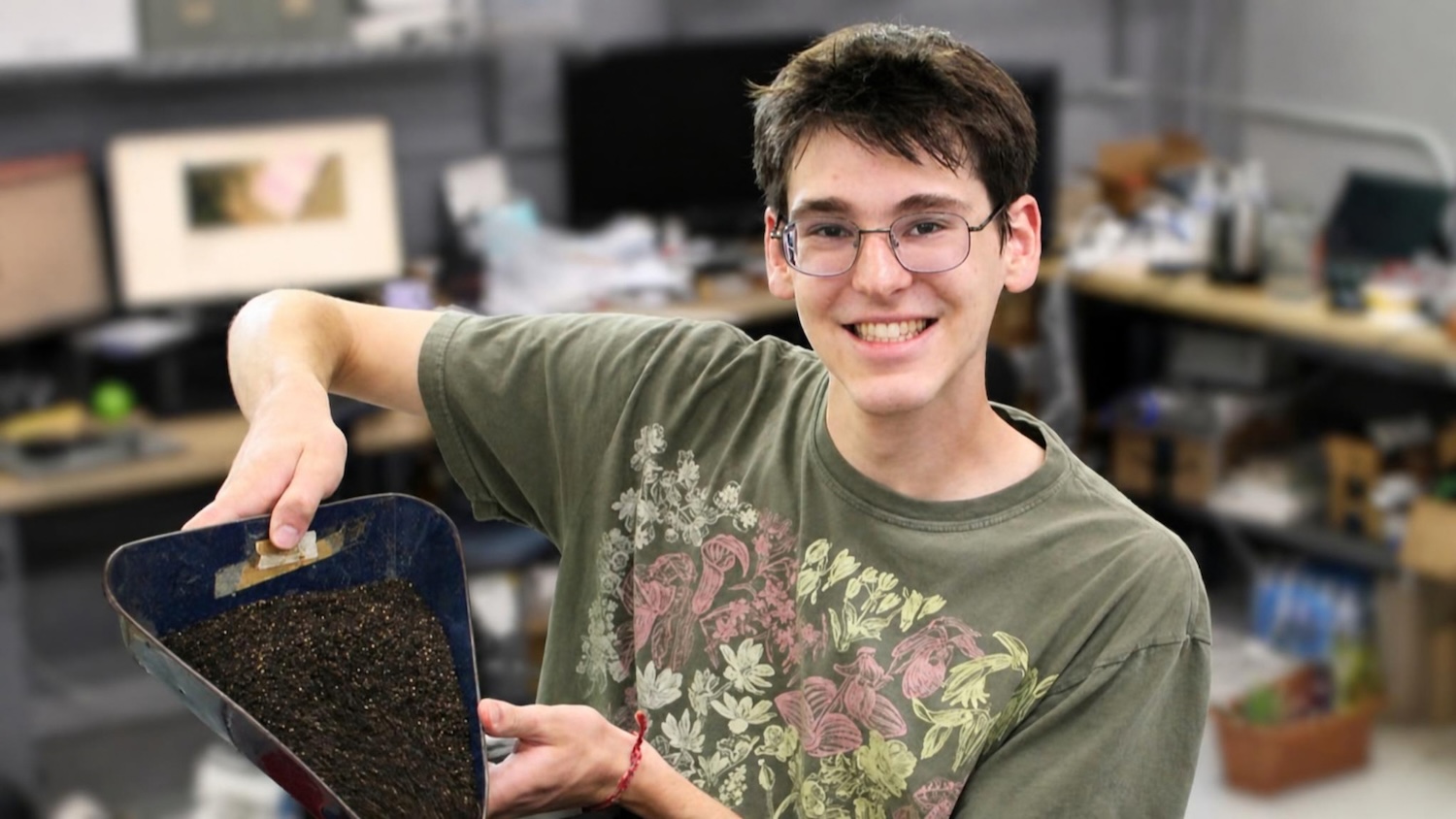
Converting Waste to Black Gold
CALS student Joy Camenisch spent the summer in Spain, where she researched how composted manure can replace synthetic fertilizer.

Born in Chicago and raised primarily in Charlotte, Joy Camenisch arrived at NC State University with a lifelong interest in animals, science and research. Majoring in animal science and agroecology and sustainable food systems, Camenisch spent her summer in Spain working as an undergraduate researcher at the Universitat Politècnica de València (UPV).
“I knew this summer would change me, but I couldn’t have imagined how much,” Camenisch says. “From making new friendships and memories to gaining new technical skills and knowledge, I gained a deeper awareness of how national political decisions and globalization can deeply influence international agriculture.”
As part of Packways, NC State’s high-impact experiences initiative, Camenisch traveled to Spain to work with doctoral students conducting research connected to a farm that uses a specialized manure-composting system. Designed to retain more nutrients and make them more available to crops, the project examined the carbon sequestration potential of composted dairy manure on agricultural sites.
Leveraging Composted Manure
Camenisch’s independent research involved collecting data on the potential benefit of using composted manure in place of synthetic fertilizer. The project involved coding, cleaning data sets and building the parameters needed to model a realistic crop operation.
“I never expected to code, but I completed the Codecademy R course and used R code to model carbon sequestration potential in semiarid agronomic ecosystems,” Camenisch says. “I had to create my whole crop rotation and the whole crop management plan, and then calculate how much that would affect carbon removal.”The effort yielded important data showing weather trends and impacts on Spanish farms.
“I observed how water scarcity, heat and changing weather patterns create significant challenges for Spanish farms,” Camenisch says. “While dairy goats are more common and better adapted to the local environment, dairy cattle face particular heat-stress concerns.”

Throughout the research process, Camenisch saw how modeling can convert scientifically backed assumptions into decision-making tools for agricultural management and research. The project could help producers communicate the value to other crop farmers and encourage wider use of composted manure.
“The final deliverable included the model, the code used to build it and a written explanation of the project’s methods, potential applications and implications,” she says. “We provided this data so other farmers can be more incentivized to use this compost and create a more closed-loop system.”
Learning Beyond the Lab
Outside of the lab, Camenisch toured a dairy farm and volunteered at the university’s goat operation. She helped with milking and cleaning while learning about goat management and precision livestock farming systems in Spain.
“The experience gave me a firsthand look at how climate, culture and economics shape agriculture,” Camenisch says. “I also was able to observe active eel, rabbit, goat and crayfish production systems and take a few more baby steps toward becoming bilingual.”
She also valued the lab’s culture. Colleagues regularly took coffee breaks together, shared lunch and made time for conversation—a contrast to the more individualistic work environments she sometimes encounters in the United States.
The people and the culture were among the most meaningful parts of the internship, Camenisch says. “I think I learned so much from being in a non-American context.”
From Animal Husbandry to Research
As a child, Camenisch spent hours observing wildlife, building roly-poly ecosystems in her backyard and tracking birds, bugs and lizards. Her interest in animal husbandry deepened in high school when she began raising mini lop rabbits.
“What started with one rabbit became a small business breeding and raising rabbits for show,” says Camenisch. “Although I was homeschooled and could not join a local FFA chapter, I was able to receive FFA grant funding to support the venture.”
Camenisch enrolled at NC State in an industry-focused animal science concentration, then later shifted toward science and research after realizing she was more interested in the research side of agriculture.

Her time in Spain helped Camenisch feel confident in her professional goals.
“My internship experience confirmed my interest in pursuing a research-focused career,” she says. “While manure carbon sequestration may not be what I want to study long-term, I absolutely loved the research process and working with my colleagues. And, this experience showed me that I can truly live internationally.”
Camenisch encourages other CALS students to take opportunities that feel challenging, ask questions and try something new. She also urges students to advocate for the experiences they want. Her opportunity to work at the goat farm was not originally included in her internship plan; it happened because she repeatedly asked to participate.
“You really can’t learn those things about yourself unless you push yourself out of your comfort zone and actually grow,” she says.