Where’s the (Local) Beef?
North Carolina Shoppers Find Neighboring Farms on MeatSuite.com
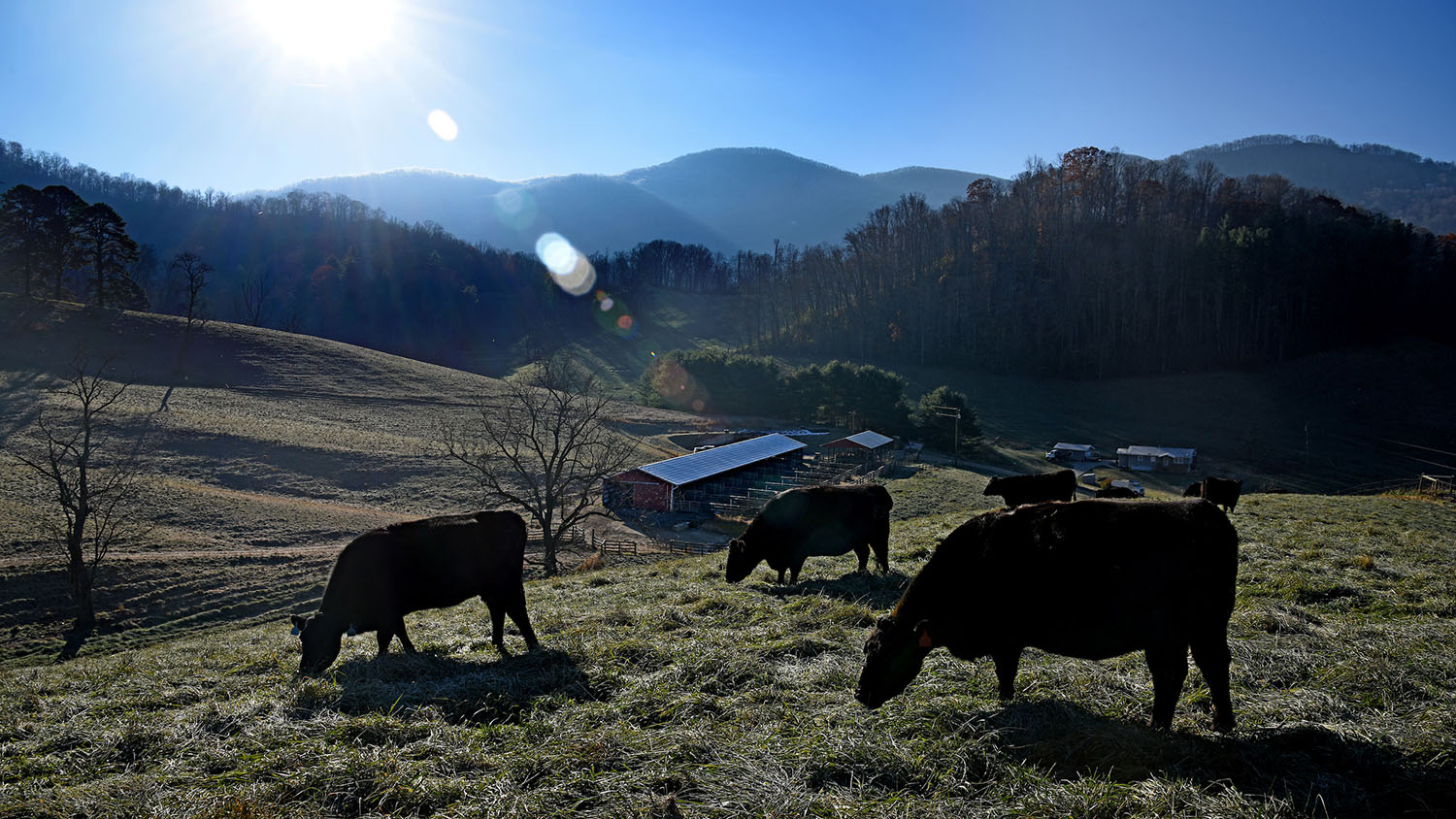
Business has been brisk recently at R&B Rhyne Farms in Angier, North Carolina, where Rex and Beth Rhyne produce pasture-raised beef, pork and chicken. More North Carolina shoppers have been seeking farmers like the Rhynes to provide local sources of meat since Aug. 21, when the U.S. announced plans to import tariff-free beef in an attempt to lower grocery store prices.
“We have seen a 30% increase in inquiries, store visits and sales the last month,” Beth Rhyne reports. “The greatest request has been for locally sourced beef. Our bulk beef inquiries and sales have gone up significantly. Customers want to know exactly where their meat comes from.”
The Rhynes, like many other producers of pasture-raised meat and poultry in North Carolina, sell their products in bulk on MeatSuite.com, a platform managed by NC Choices, that connects shoppers with local farmers, using the tagline, “Find your farmer. FIll your freezer.” Whether it’s 10 pounds of ground beef, a selection of meat for the grill, or a whole animal, options are plentiful.
For meal planning, a new, built-in tool at the top of the screen shows shoppers how many servings a bulk purchase will provide for a family, along with the cost per meal, simplifying the process for those unfamiliar with bulk buying.
“With our economy, inflation and various other things happening in the marketplace, our local food is somewhat insulated from those market price changes,” says NC State University’s Sarah Blacklin, program director for NC Choices. “So the local meat on MeatSuite can actually be cost-competitive, or even cheaper in some cases, compared to what you would buy from the grocery store. That’s attractive right now, not only for the stability of it, but the cost competitiveness.”

Feeding the Demand
MeatSuite continues to grow, with more than 60,000 shoppers annually and a spike in online traffic since late August. The platform is administered by NC Choices, an initiative of N.C. Cooperative Extension and the Center for Environmental Farming Systems at NC State University that promotes sustainable local, niche and pasture-based meat supply chains in North Carolina.
Over 350 farms across the state use the MeatSuite platform to sell their products in bulk, representing 81 of North Carolina’s 100 counties.
Though the average beef herd is about 35 animals, farms vary greatly across North Carolina, says Lee Menius, technical program specialist with NC Choices.
“A really nice thing about Meat Suite is when you look at North Carolina and our diversity of farms, we’ve got a lot of big farms, we’ve got a tremendous amount of small pockets of farmland here, everything from the hobby person who raises a couple of cows or sheep or a handful of chickens every year to people who have a herd of several hundred cows. And we have all of those represented across MeatSuite.
Meating Needs
MeatSuite, which originated at Cornell University in New York in 2012, was launched and expanded in North Carolina in April 2020 at the beginning of the pandemic. Since then, training for producers, technical support and site improvements have made it easier for farmers to use.
“Farmers need options because no two operations are the same,” says Milo Lewis, executive director of the North Carolina Cattlemen’s Association. “Traditional livestock markets remain critically important to our industry, but direct-to-consumer marketing can provide another opportunity to producers who want to diversify how they sell their cattle, to catch more value from the animals that they raise. And MeatSuite provides the platform to connect those wanting to sell directly to the consumer.”
Aside from the bulk buying directory that shoppers see, MeatSuite also offers farmer-facing tools accessible through a log-in. These help producers with marketing, pricing, building product bundles and even promotions such as freezer giveaways for MeatSuite shoppers. “We have a lot of farms signed up, but we’ve got plenty of room for more,” Menius says.
Lewis, who earned her bachelor’s degree in agricultural science from NC State, notes that NC Choices used the MeatSuite platform as a model for its online NC Hay Finder tool, developed to serve livestock producers’ needs during the drought. In 2025, NC Choices and NC State Extension launched Hayfinder to connect farmers who needed hay with farmers who had hay to sell.
“It shows how Extension recognizes producer needs, and they adapt and build frameworks to support it,” Lewis says. “That’s lasting.”
Cattle in North Carolina
- North Carolina had about 690,000 total head of cattle in January 2026. About half — 350,000 head — were beef cattle.
- Beef cattle are raised in all 100 counties in North Carolina.
- Chatham, Randolph, Wilkes and Duplin counties are top beef-producing areas.
- Source: U.S. Department of Agriculture National Agricultural Statistics Service
- Categories: