N.C. PSI Affiliates Win NCDA&CS Funding to Enhance N.C. Agriculture
Project goals range from developing an AI-powered system to rapidly screen fungicides for emerging plant diseases to securing plant-based alternatives to graphite for lithium ion batteries.

Seven North Carolina State University researchers with ties to the N.C. Plant Sciences Initiative have been awarded recent grants from the N.C. Department of Agriculture and Consumer Service to boost new crop and livestock production and advance the state’s agricultural economy.
The NCDA&CS grants are designed to help researchers identify promising crops, value-added products and agricultural innovations and to promote the marketing and education necessary to make those crops or products commercially viable and profitable for North Carolina growers and agribusinesses.
Investing in ag research is money well spent. … Every dollar invested returns around $20.
As N.C. Agriculture Commissioner Steve Troxler noted, “Investing in ag research is money well spent. … Every dollar invested returns around $20, which is significant.”
Of the 12 projects that the NCDA&CS selected for funding in the program’s 2025-26 cycle, seven have ties to the N.C. PSI. Six are to N.C. PSI faculty affiliates, and the seventh involves a sensor project to apple-related project grew out of the initiative’s Connecting2Grow program.
The projects range from developing an AI-powered imaging platform to screen fungicides against emerging plant pathogens to securing domestic battery materials from N.C.-grown switchgrass.
Here are details of funded projects with N.C. PSI ties:
AI Fungicide Screening for Rapid Response
Investigator: Lina Quesada, Department of Entomology and Plant Pathology and N.C. PSI faculty affiliate

Emerging plant pathogens threaten North Carolina’s agricultural economy by outpacing the development of effective management tools. Current fungicide screening methods are labor-intensive and slow, delaying response during outbreaks.
This project will develop and validate an artificial intelligence (AI)-enabled microplate imaging platform to rapidly evaluate fungicide efficacy against emerging fungal and oomycete pathogens.
Using Colletotrichum scovillei — an emergent pathogen causing pepper anthracnose — as a case study, the project will establish a proof-of-concept workflow that integrates automated image capture, AI-based growth inhibition analysis and data export for fungicide performance assessment. The resulting platform will greatly shorten the time from pathogen detection to management recommendations, strengthening preparedness for future disease threats.
By creating a scalable, in-state capability for rapid fungicide screening, the project will expand North Carolina’s capacity to respond swiftly to emerging pathogens and protect the productivity and profitability of specialty crop industries statewide.
Securing Domestic Battery Materials from Biomass
Investigator: William Joe Sagues, Department of Biological and Agricultural Engineering and N.C. PSI faculty affiliate
Because of its essential role in energy storage, electronics and defense applications, graphite is considered a critical and strategic mineral, but the U.S. depends almost entirely on imports, over 90% of which originate from China. The fastest-growing demand for graphite is in lithium-ion battery anodes, composed entirely of high-quality graphite.
This project is designed to strengthen the U.S. energy technology supply chain by providing alternatives that support domestic battery manufacturing. The project involves producing high-performance graphite from sustainable N.C. biomass, building on Sagues’ advances in biographite synthesis.
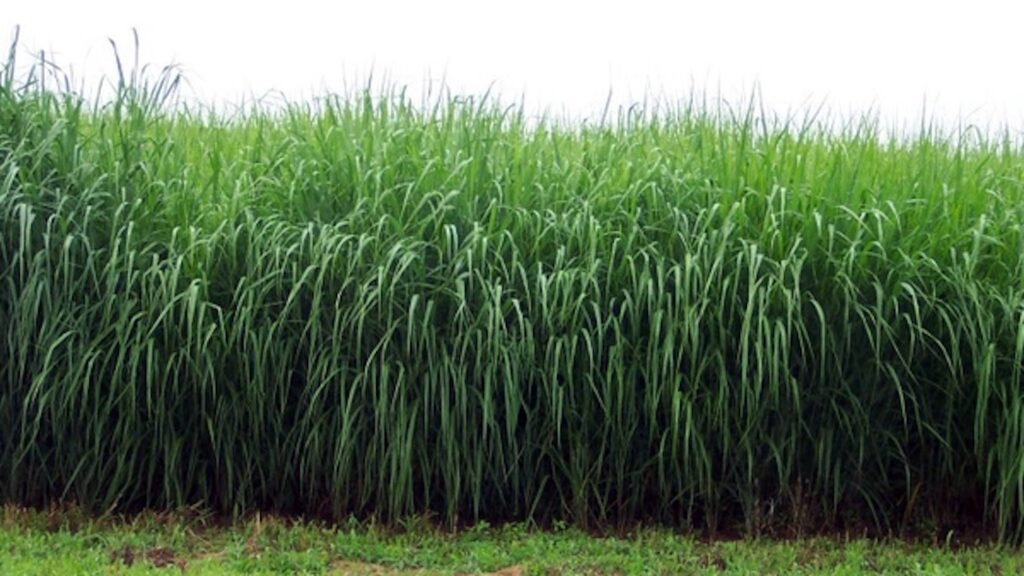
Goals include demonstrating a pathway to battery-grade graphite that decouples U.S. supply chains from reliance on China. The project will use switchgrass grown in North Carolina by Plantd Materials in Oxford, N.C. The feedstock contains natural silicon that serves as a dopant, enhancing electrochemical performance in the biographite.
Partnering with Verenovo, a Wilkesboro-based company, the project will integrate feedstock production, thermal conversion and material refinement to position the state as a leader in renewable graphite manufacturing.
Hemp grain and seed production
Investigator: David Suchoff, Department of Crop and Soil Sciences and N.C. PSI platform director for extension outreach and engagement

Industrial hemp continues to expand in the state, driven by growing markets for both fiber and grain. This project supports the continued growth of North Carolina’s hemp sector and will enhance N.C. farmers’ competitiveness in emerging markets.
Building on earlier work to strengthen production systems for improved profitability and sustainability, the project’s goals are to reduce fiber hemp seed costs by developing locally adapted seed production methods and to refine grain production recommendations, particularly those related to harvest timing, for N.C. farmers.
Current fiber hemp seed is imported and costly, posing a major barrier to farmer adoption. Suchoff’s research explores late planting strategies that produce shorter, more easily harvested seed-bearing plants, potentially enabling domestic seed production and lowering input costs.
Preliminary research results show that U.S.-developed grain varieties outperform northern-adapted types and that novel breeding approaches, such as those reducing male-to-female plant ratios, can substantially increase yield to meet demand for locally produced hemp grain.
Micro-grafted disease resistant Fraser fir
Investigator: Justin Whitehill, Department of Forestry and Environmental Resources and N.C. PSI faculty affiliate

Led by the Whitehill Lab Christmas Tree Genetics (CTG) Program, in close collaboration with Rooted-in-Tech, an N.C. PSI Seed2Grow startup company focused on expert grafting; the Upper Mountain Research Station in Laurel Springs; and the tissue culture company Rebel Cultures, this project will scale-up production of clonal disease resistant tissue cultured momi fir to be used as a rootstock for micrografting of Fraser fir and commercial use by the N.C. Christmas tree industry.
This project is designed to help N.C. Fraser fir farmers solve their No. 1 problem, Phytophthora root rot. The goal is to develop a protocol for the commercial production of disease-resistant micro-grafted Fraser fir using momi fir clonal rootstock.
Optimizing Fertilizer Recommendations for Economic Return
Investigator: Luke Gatiboni, Department of Crop and Soil Sciences

This project’s goal is to use long-term soil fertility data and machine learning to develop fertilizer recommendations that maximize farmer return on investment rather than yield alone.
Researchers will collect 2026-27 field data from three long-term trials at the Tidewater, Peanut Belt and Piedmont research stations and compile historical data from these and other soil fertility trials conducted across North Carolina over the past 70 years.
Traditionally, these trials have defined soil test critical levels of phosphorus and potassium — the nutrient levels needed to achieve 95% of maximum yield, beyond which additional fertilization is not justified.
This project introduces a new framework based on economically optimized fertilizer rates. Using return on investment as the guiding metric, researchers will determine fertilizer rates that maximize farmer profitability rather than yield alone.
Machine learning tools will analyze the extensive long-term dataset to develop ROI-based fertilizer recommendations tailored to N.C. cropping systems, and an online tool will be created to recalculate P and K fertilizer rates based on economic return. By integrating soil test results, fertilizer costs, and commodity prices, the tool will identify the most economical fertilizer rates for growers.
Novel Antibiotics for North Carolina Agriculture
Investigator: Michael Bradshaw, Department of Entomology and Plant Pathology

Antimicrobial resistance is eroding the effectiveness of current drugs in animal agriculture, creating an urgent need for new antimicrobial strategies that protect livestock health and support stewardship. This project will leverage fungi to discover metabolites with novel modes of action that can strengthen the state’s agricultural industry.
Using a dilution-to-extinction pipeline, NC State researchers have isolated around 6,000 cultures representing about 2,000 fungal species, including some 100 likely undescribed taxa. Preliminary co-culture assays found 88 promising species with antibacterial potential against Enterobacteriaceae proxies.
Bradshaw’s team will implement a resistance-informed screening workflow that challenges isolates against certain bacterial strains with defined resistance profiles and use mass spectrometry imaging and comparative metabolomics to localize and identify active compounds and synergistic combinations.
The results of the proposed pipeline will lay the groundwork for developing fungal-derived antimicrobials that reduce antibiotic dependence and enhance animal health across North Carolina’s livestock and poultry industries.
Multi-Spectral Imaging for Data-driven Apple Production
Investigator: Chenhan Xu, Department of Computer Science

This project involves creation of an AI-enabled multi-spectral imaging system to reduce labor and improve decision-making for pruning and fruit thinning in North Carolina apple orchards.
Apple growers in North Carolina face major challenges from two labor-intensive orchard management tasks — dormant pruning and fruit thinning — that are essential for consistent yields and fruit quality. Current practices rely on manual inspection and chemical thinning methods that are time-consuming, costly and prone to uncertainty, often leading to inconsistent results and significant labor shortages during peak seasons.
The research team is developing a non-destructive, automated system that integrates AI-driven analytics with multi-spectral 3D imaging to identify apple flower buds and monitor fruit responses to chemical thinners. The system will capture high-resolution tomographic images of buds and fruits across multiple wavelengths (visible, infrared, and radio- frequency) and apply machine learning to assess bud type, water content and fruit abscission. A prototype platform will combine these technologies to deliver rapid, accurate and data-driven insights.
Goals are to help growers reduce manual labor, improve decision-making and thus enhance the efficiency, sustainability and profitability of the N.C. apple industry.
- Categories: