Bob Rose
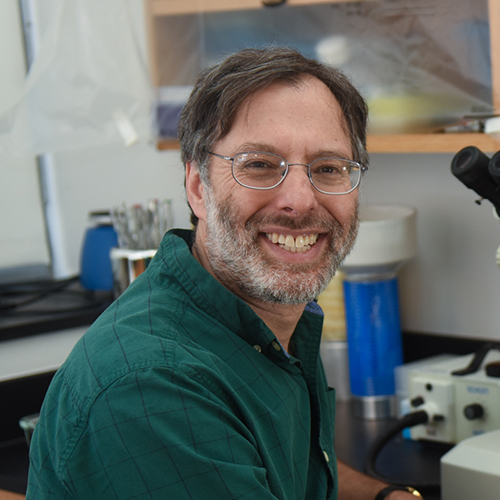
Associate Professor
Director, Interdisciplinary BIochemistry Masters Program
Molecular and Structural Biochemistry
Carbon-fixation plant growth
Polk Hall 144
919-513-4191 [email protected]Bio
Research Interests
Our lab studies the structure and function of carbon fixing enzymes. Our goal is to engineer these enzymes to capture atmospheric CO2 to enhance plant growth. Plants rely on the enzyme Rubisco to fix CO2 as part of the Calvin Cycle. Rubisco is an inefficient enzyme – it has a slow turnover rate and binds oxygen as well as CO2. Removing the oxygen byproducts in a process called photorespiration is energetically costly for the plant. Rubisco is mostly active during the day, when photosynthesis is active. Other carbon fixing cycles could enhance plant growth by fixing carbon more efficiently than the Calvin Cycle.
Currently we are studying two carbon-fixing enzymes from order Aquificales, thermophilic deep branching bacteria that resemble early life on Earth. These enzymes are part of the reductive tricarboxylic acid (rTCA) cycle. This cycle is an alternative to the Calvin Cycle, using much less energy to fix CO2. The two enzymes we are studying are 2-oxoglutarate carboxylase (OGC) and oxalosuccinate reductase (OSR). OGC is a unique member of the biotin-dependent carboxylase family that includes pyruvate carboxylase and acetyl-CoA carboxylase which play essential roles in central metabolism and fat biosynthesis. OGC is the only family member that can bind and carboxylate 2-oxoglutarate. OSR then reduces the product of OGC to form isocitrate. OSR is an ancestral form of isocitrate dehydrogenase, an important enzyme in the oxidative form of the TCA cycle that extracts energy by oxidizing and decarboxylating isocitrate. OSR catalyzes the oxidation/reduction reaction of isocitrate dehydrogenase, but not the decarboxylation step. OGC and OSR are most active at high temperatures, above 60 ℃. Our goal is to identify mutations in the enzymes that optimize activity at mesophilic temperatures for use in plants. We propose to achieve that goal through studies of protein structures, enzyme assays as a function of temperature, and mutagenesis studies.
Education
B.A. Physics Yale College 1982
M.A. History of Science University of California, Berkeley 1989
Ph.D. Biophysics University of California, San Francisco 1996
Post-doctoral Molecular and Cell Biology University of California, Berkeley 2002
Area(s) of Expertise
carbon fixing enzymes, structural biology (protein crystallography, single-particle cryoEM), temperature dependence of enzyme activity, Interdisciplinary Biochemistry Masters Program (IBMP)
Publications
- Characterization of an isobutylene epoxide hydrolase (IbcK) from the isobutylene-catabolizing bacterium Mycolicibacterium sp. ELW1 , Applied and Environmental Microbiology (2025)
- Structural and kinetic characterization of an acetoacetyl-Coenzyme A: acetate Coenzyme A transferase from the extreme thermophile Thermosipho melanesiensis , Biochemical Journal (2025)
- Binding specificity and function of the SWI/SNF subunit SMARCA4 bromodomain interaction with acetylated histone H3K14 , Journal of Biological Chemistry (2021)
- Structure, Function, and Thermal Adaptation of the Biotin Carboxylase Domain Dimer from Hydrogenobacter thermophilus 2-Oxoglutarate Carboxylase , Biochemistry (2021)
- 5-Hydroxymethylcytosine in E-box motifs ACAT|GTG and ACAC|GTG increases DNA-binding of the B-HLH transcription factor TCF4 , Integrative Biology (2016)
- A High-Resolution Crystal Structure of a Psychrohalophilic α–Carbonic Anhydrase from Photobacterium profundum Reveals a Unique Dimer Interface , PLoS ONE (2016)
- Modeling the Growth of Archaeon Halobacterium halobium Affected by Temperature and Light , Applied Biochemistry and Biotechnology (2016)
- Evaluation of a DLA-79 allele associated with multiple immune-mediated diseases in dogs , Immunogenetics (2015)
- Carboxylation of cytosine (5caC) in the CG dinucleotide in the E-box motif (CGCAG|GTG) increases binding of the Tcf3|Ascl1 helix-loop-helix heterodimer 10-fold , Biochemical and Biophysical Research Communications (2014)
- Interactions with the Bifunctional Interface of the Transcriptional Coactivator DCoH1 Are Kinetically Regulated , Journal of Biological Chemistry (2014)