N.C. PSI Welcomes Three Companies to Innovation Hub
Albaugh LLC, Mosaic Biosciences and Terrana Biosciences have joined 15 other companies in the Innovation Hub, designed to spark new partnerships and ideas among industry representatives, university researchers and students.
The North Carolina Plant Sciences Initiative welcomes three new agricultural technologies companies — Albaugh LLC, Mosaic Biosciences and Terrana Biosciences — as its newest Innovation Hub members.
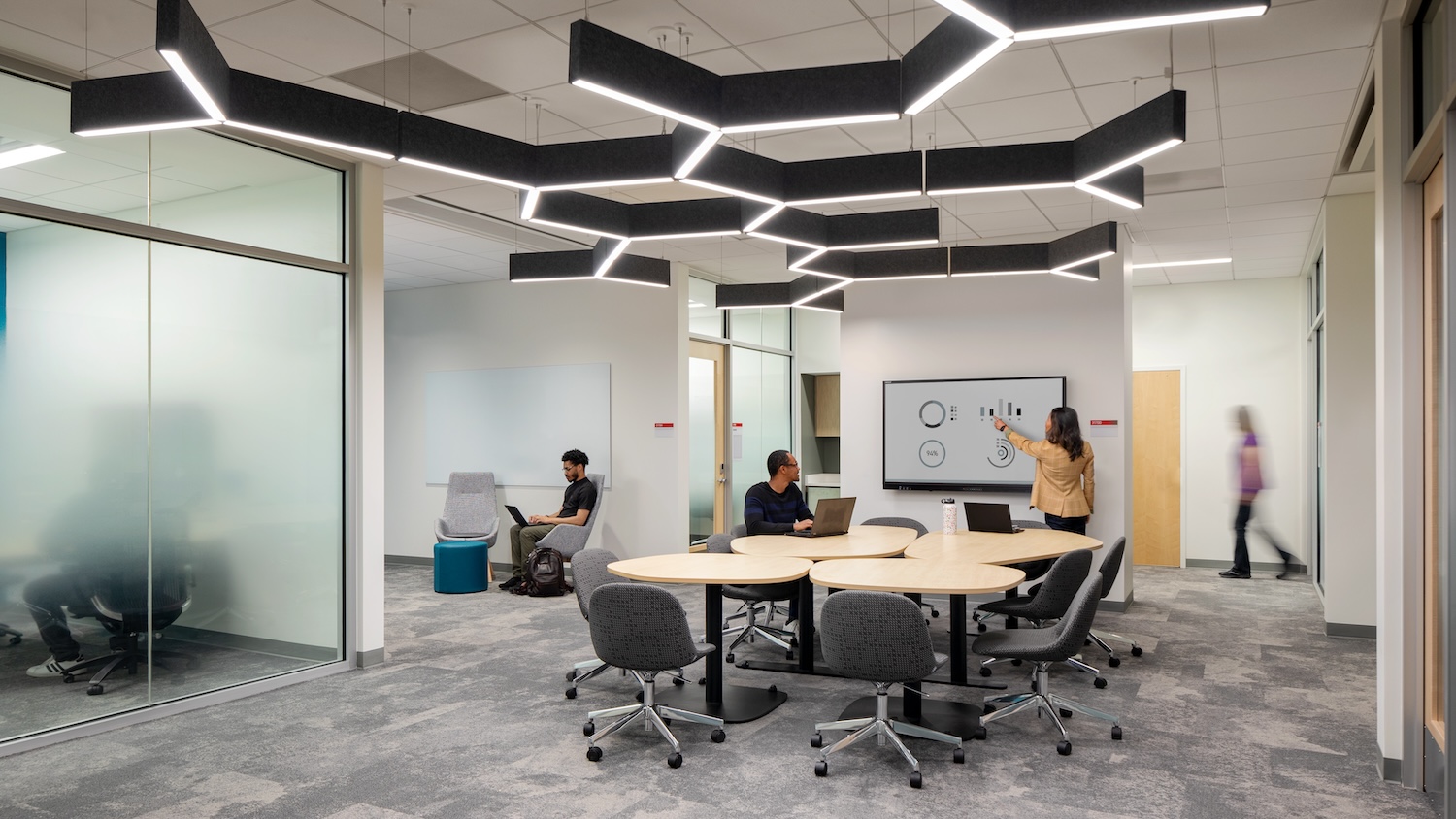
Located in NC State University Plant Sciences Building on Centennial Campus in Raleigh, the hub provides a place where company representatives can build relationships with the N.C. PSI researchers and students as they pursue solutions to some of the world’s most important agricultural challenges.
Learn more about the hub’s newest members, their work and their partnerships with NC State and the N.C. PSI:
Albaugh, LLC

Albaugh, a limited liability company with headquarters in Ankeny, Iowa, is the largest privately held supplier of crop protection products in the world, with an ever-expanding portfolio of core crop protection products, a seed treatment platform, turf and ornamental products and an industrial product line.
Founded in 1979 by Dennis Albaugh, the company has manufacturing and packaging facilities in St. Joseph, Missouri, as well as operations in North America, Mexico, Brazil, Argentina, Europe, the Middle East and Asia-Pacific. From these locations, it serves other markets, including Central America, South America and Africa.
Q+A With Albaugh LLC’s Nathan Ehresman, Regulatory Director for North America
How does your company address challenges in agriculture?
Farmers today face many challenges, including economic instability from rising input costs and volatile markets. We know they are looking for alternative solutions to reduce their operating costs while not compromising efficacy.
Albaugh’s portfolio is perfect for today’s environment, offering high-quality products and great service at competitive prices, giving farmers a much-needed alternative to succeed.
Why did you choose to be a member of the Innovation Hub?
Collaboration is a key to supporting Albaugh’s vision to be the leading alternative for crop protection products globally. Partnerships like this, between Albaugh and the Innovation Hub at NC State, provide the perfect opportunity to bring together manufacturing, scientific and technical expertise to deliver solutions that meet the needs of North Carolina farmers as well as growers across the country and around the globe.
Does your company partner with NC State in other endeavors?
Albaugh actively collaborates with NC State on multiple initiatives. We are a major supporter and donor to the NC State turfgrass program and the Center for Turfgrass Environmental Research and Education, contributing to their research and development efforts. We engage in field research with various faculty members and support the annual field day event.
Additionally, Albaugh conducts extensive field research with NC State’s agriculture faculty, rigorously testing our products to ensure top performance before market launch. These studies, often carried out with interdisciplinary staff at NC State, help us refine and validate our agricultural solutions.
What do you think about approaching grand agricultural challenges through interdisciplinary research and technology development?
Addressing major agricultural challenges such as food security and sustainable resource use benefits from interdisciplinary research and technological development. Integrating knowledge from agronomy, chemistry, data science, biotechnology and engineering contributes to forming comprehensive solutions for complex issues.
For example, using precision agriculture technologies alongside advanced chemical formulations can help optimize crop yields and reduce environmental impact. Techniques including AI-driven analytics, sensor-based monitoring, and gene-editing are used to develop targeted products.
Mosaic Biosciences

Mosaic Biosciences™, a division of The Mosaic Company, is headquartered in Research Triangle Park. Its science-backed portfolio of biological technologies is designed to enhance crop nutrition by activating the natural connection between soil, plants and the microbiome. Key products include BioPath®, a biological fertilizer complement, and PowerCoat™, a biological coating for granular fertilizers.
Q+A With Mosaic Biosciences’ Jeff Wheeler and Scott Rabe
How does your company address challenges in agriculture? (Jeff Wheeler, vice president, commercial biosciences)
Mosaic Biosciences addresses agricultural challenges by combining advanced crop nutrition with cutting-edge biological technologies. Incorporating these scientifically proven biologicals into crop nutrition strategies empowers farmers to boost yields, enhance profitability and contribute to a more resilient and sustainable future for agriculture.
Why did you choose to be a member of the Innovation Hub? (Jeff Wheeler, vice president, commercial biosciences)
Mosaic Biosciences joined the Innovation Hub to deepen its commitment to advancing agricultural science. The Hub offers a unique opportunity to collaborate with NC State’s leading plant science research, amplify our strategic initiatives, and actively engage with the broader agricultural innovation ecosystem—all while hosting impactful events and conversations in a dedicated space designed to foster industry-academic partnerships. This strategic move strengthens our connection with the Ag Tech community and opens the door to exciting opportunities for collaboration, innovation, and growth.
Does your company partner with NC State in other endeavors? (Jeff Wheeler, vice president, commercial biosciences)
Not at the current time, but we are open to exploring those opportunities in the future.
What do you think about approaching grand agricultural challenges through interdisciplinary research and technology development? (Scott Rabe, director, R&D biosciences)
We believe that solving the next generation of agricultural challenges requires interdisciplinary teamwork for the development of breakthrough technologies. By integrating expertise in crop nutrition, biology-based sciences, and academic institutions — and collaborating closely with researchers and entrepreneurs — we can accelerate the creation of solutions that are both innovative and practical. This collaborative model supports the development, validation, and deployment of transformative technologies to address food security, sustainability, and other pressing agricultural issues.
We invite partners across disciplines to join us in advancing these solutions. Let’s work together to shape the future of agriculture.
Terrana Biosciences

Terrana Biosciences is a plant biotech company developing adaptive, targeted agricultural solutions through a novel RNA technology platform. It has product development and traits teams in the Research Triangle Park and molecular and computational biology teams in Cambridge, MA.
Q+A With Terrana Biosciences
How does your company address challenges in agriculture?
Terrana fuses nature’s intelligence and machine intelligence to generatively design versatile RNA-based solutions for every aspect of plant health from seed to stem.
Terrana is developing targeted products designed to work at any time in a plant’s lifecycle, enabling a continuous product pipeline that is adaptive and responsive to variable climate conditions and capable of generating new solutions at a fraction of the time and cost associated with conventional agriculture approaches.
We are working to create new tools that will enable farmers to fight and prevent disease and pests, increase yields, adapt quickly to climatic conditions, and maintain soil health.
Why did you choose to be a member of the Innovation Hub?
Terrana’s first location in North Carolina was in the Plant Sciences Building at NC State University. When we moved on to a larger space, we wanted to maintain our strong connection to the N.C. Plant Sciences Initiative. Being a member of the Innovation Hub allows us to do just that.
Does your company partner with NC State in other endeavors?
Terrana interacts with NC State faculty as consultants for the company. One of our leaders, Dale Karlson, is also an adjunct professor in the Department of Plant and Microbial Biology.
What do you think about approaching grand agricultural challenges through interdisciplinary research and technology development?
Terrana was founded on insights derived from interdisciplinary research and thrives today because of the combination of disciplines that we bring together to fuel our tech development. Our company was founded by Flagship Pioneering, the company that created Moderna, to apply a similar approach to plant health that created lifesaving improvements in human health. Today, our team includes experts in computational biology, machine learning, plant pathology, molecular biology and nanotechnology.
About the N.C. PSI
With over 100 faculty affiliates from nine North Carolina State University colleges, the N.C. Plant Sciences Initiative brings together the brightest minds from academia, government and industry to solve complex agricultural challenges through interdisciplinary scientific discovery and innovation, extension and outreach, and education and workforce development. It is part of NC State University’s College of Agriculture and Life Sciences, with ties to the Office of University Interdisciplinary Programs.
- Categories: