Growing N.C. Agriculture, One Startup at a Time
Through its Seed2Grow program, the N.C. Plant Sciences Initiative helps budding entrepreneurs who want to turn scientific ideas into real-world agricultural solutions.

The North Carolina Plant Sciences Initiative’s Seed2Grow program will soon mark two major milestones: the first graduation from its agricultural technology incubator and a new 12-week series of workshops aimed at keeping the innovation pipeline flowing.
The year-old entrepreneurship program is one way the N.C. PSI helps ensure that NC State University plant sciences discoveries benefit farmers and consumers. Its centerpiece ag tech startup program offers several advantages to companies licensing NC State technology or run by young alumni:
- Access to the Plant Sciences Building’s specialized labs, core facilities, research and meeting spaces
- Proximity to NC State talent
- Opportunities to connect with seasoned entrepreneurs in the N.C. PSI Commercialization Advisory Council
- Help with business plan development and marketing
Seed2Grow also works to feed the technology pipeline by helping the NC State community develop skills and access resources to succeed as ag tech entrepreneurs.
Designed to Strengthen N.C. Ag Tech
Seed2Grow’s leadership team includes N.C. PSI Executive Director Adrian Percy, NC State Innovation and Entrepreneurship Executive Director Stephen Markham, N.C. PSI Director of Innovation Partnerships Kathleen Denya and Poole College of Management Director of Technology Entrepreneurship and Commercialization Lisa Chang.
As Denya explains, Seed2Grow complements other university programs aimed at ensuring that discoveries are put to practical use in ways that benefit the state.
The university has great channels for help with patenting and licensing innovations and helping startup companies launch and grow. We wanted to build a pool of … resources specifically geared toward ag tech.
“The university has great channels for help with patenting and licensing innovations and helping startup companies launch and grow. We wanted to build a pool of knowledge and resources specifically geared toward ag tech,” she says. “Ag tech startups have different needs than startups in other industries, and it often takes them longer to get technologies to market.”
Denya cites multiple successes in the program’s first year: the opening of a 2,500-square-foot ag tech incubator in the Plant Sciences Building, the addition of four startups to the membership roster and the creation of a student pitch competition, among them.
“In our second year, we’re building on that momentum with new offerings designed to help strengthen the pipeline of ag tech innovation here in North Carolina and beyond.”
Help From Seasoned Advisers
One key to Seed2Grow’s success, Denya says, has been support from a Commercialization Advisory Council, or CAC, that includes university and industry representatives with deep experience in technology entrepreneurship.
It is a great opportunity to give back. There are few industries more impactful to food security, global trade and planetary health than agriculture.
Council members routinely share their entrepreneurial expertise with Seed2Grow companies, helping them overcome obstacles and connect with potential scientific and business partners.
Some, like venture capital leader Mark Brooks, see their service on the council as a way to help ensure that NC State continues to have a significant impact on key societal issues.
“As an NC State alumnus, it is a great opportunity to give back. There are few industries more impactful to food security, global trade and planetary health than agriculture,” he says.
A Different Kind of Commencement
A standout moment for Seed2Grow this year will be Hoofprint Biome’s graduation from the program. Hoofprint Biome was one of the first two startups to occupy space in the Plant Sciences Building incubator.
In April, the company announced that it had raised over $15 million to accelerate development of an enzyme-based feed additive that reduces methane output from cattle while boosting milk production in dairy cows and weight gain in beef cattle.
The funding means Hoofprint will grow its staff — and outgrow the Seed2Grow incubator.

Kathryn Polkoff, who founded the company with fellow NC State Ph.D. graduate Scott Collins, says their decision to join Seed2Grow “was a no-brainer.”
“We’re incredibly grateful for the support and sense of community we’ve experienced with the N.C. PSI — it’s played a key role in helping us grow quickly and thoughtfully,” Polkoff says. “Even as we move into our own space, we’re looking forward to staying closely connected with the PSI and broader NC State community.
“It’s a special ecosystem, and we’re proud to have grown out of it.”
Making Room for Others in the Incubator
Hoofprint Biome’s departure from the incubator will make space for other startups. So far, the incubator has been reserved for companies with close NC State ties, but that may change soon.

With support from Bayer Crop Science, the N.C. PSI is inviting ag tech startup companies, without or without NC State ties, to apply for space in the incubator for a year.
One winning ag tech startup selected by Bayer and the PSI will receive a lab bench and cubicle in the incubator, plus access to state-of-the-art wet-lab facilities, basic lab equipment and more.
The winner will also gain connectivity to Bayer experts and mentors across its global innovation network and proximity to NC State University and the Research Triangle Park area’s dynamic entrepreneurial environment.
Denya sees the competition for the “golden ticket” to the incubator as a way not only to grow global interest in North Carolina’s ag tech industry, but also to encourage NC State faculty and students to explore new avenues for making their ideas and discoveries accessible to farmers and others.
Growing Participation in Seed2Grow
While Denya works to add new companies to NC State’s ag tech pipeline, she’s also taking steps to ensure those already in the program continue to move toward their own Seed2Grow graduations.
Currently, Seed2Grow has eight member companies working on a range of ag tech solutions — from tiny sensors that let farmers know their crops are stressed before visible symptoms emerge (Verdia Diagnostics) to healthy seedlings grown indoors to meet growers’ specific needs (Rooted-in-tech).

Several Seed2Grow companies have been honored for their work over the past year:
- Soteria Formulations, led by Tahira Pirzada of NC State’s Department of Chemical and Biomolecular Engineering, came in first place in the Daugherty Endowment track of VenturePack Challenge, NC State’s largest entrepreneurial challenge. Taking a business-to-business approach, Soteria develops seed coatings and pelleted granules from biodegradable crop residues. The company’s technology can extend the performance of agricultural chemicals and biological products
through targeted delivery and extended release. - Ceretune LLC’s founder Reid Barnett, an NC State doctoral student in fiber and polymer science, won top awards from the Ocean Exchange, which promotes the blue economy, and the Wilson College of Textiles’ first Pitch to the Pack competition. Ceretune produces floating islands made of biodegradable, nonwoven materials seeded with plants that can absorb nutrient pollution from water, then can be composted or processed in ways that allow the captured nutrients to be reused.
- Eli Hornstein, an alumnus of NC State’s Department of Plant and Microbial Biology and founder of Elysia Bio, received a two-year Activate Fellowship, which provides funding, technical resources and other entrepreneurial support for promising science and engineering entrepreneurs, and a Spark Grant for a methane removal project. His biotech company uses plant-based compounds to address a range of challenges related to livestock production.

Rounding out Seed2Grow’s startup roster are Raleigh Biosciences, a gene discovery company that helps plant scientists use single cell sequencing for crop improvement, and Benanova, which has pioneered a class of eco-friendly functional materials based on natural materials.
Access to World-Class Facilities, Talent and Expertise
Seed2Grow CEOs indicate that the support they’ve received from Denya and other CAC members is making a difference in their companies’ growth.
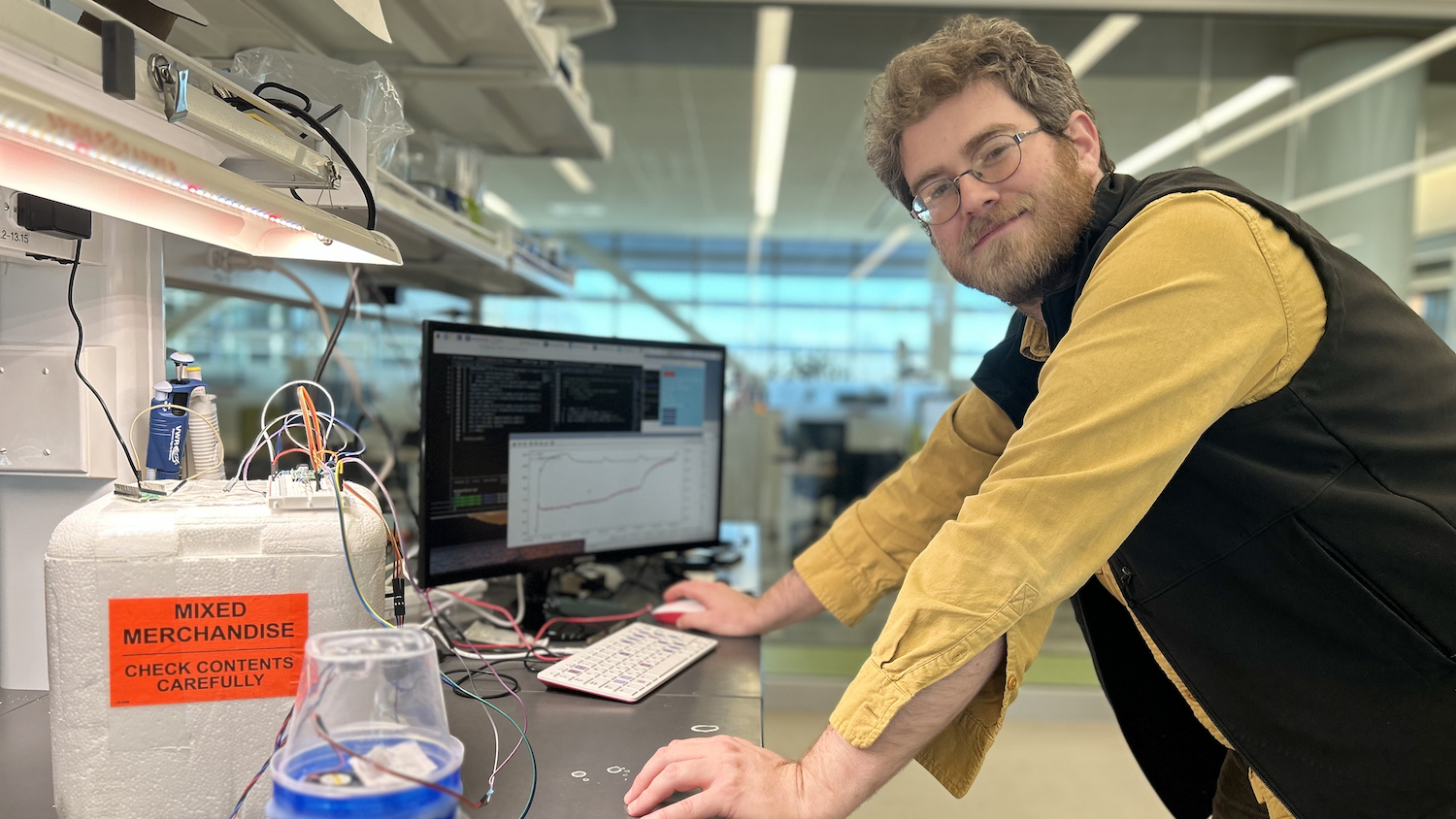
Hornstein, for example, sees his access to world-class scientific facilities in the Plant Sciences Building and connections he’s made in the local ag tech community as keys to some of his early successes as an entrepreneur.
“Within the last year, we were able to attract support from national funders, and I think we were able to do it because we were able to say, ‘We have a great network. We have a great facility to do the work. We’re ready to grow.’ In most places in the country, there’s nothing like this.”
Hornstein also says he’s making the most of the ability to work alongside talented NC State students, postdocs and faculty members. He’s found one employee through Seed2Grow connections and hopes he’ll be in a position soon to hire others.
“We’ll hopefully be hiring more people this year, and finding someone for this type of work can be tough,” he says. “Being in the building allows me to get to know students and postdocs and understand how they work, so when we’re ready we might just know the person to make a job offer to.”
Like Hornstein, Pirzada is a scientist-turned-entrepreneur who is grateful to be part of Seed2Grow.
As Soteria CEO, she touches base regularly with Denya and Chang, director of technology entrepreneurship and commercialization in the Poole College.
“They’re there for us, asking us if we have any problems and if they can help us in any way,” says Pirzada, a scientist-turned-entrepreneur. “The entrepreneurial journey is unpredictable – it’s like a rollercoaster ride. … To have somebody come in and raise your spirits and show you that they’re there for you, that means a lot.”
It’s great to be able to connect with experts … in the ag tech space locally and to previous ag tech startup founders who’ve walked the walk, done this and know what it takes to be successful.
Zach Hetzler, Verdia Diagnostics’ co-founder and CEO, also appreciates the advice and networking opportunities he’s gained from being part of Seed2Grow.
“It’s great to be able to connect with experts who are in the ag tech space locally and to previous ag tech startup founders who’ve walked the walk, done this and know what it takes to be successful,” says Hetzler, who earned a Ph.D. in chemical and biomolecular engineering from NC State in December 2024.
“We were just incorporated in February, and we joined Seed2Grow in March. Already, we’ve met with a few council members to help us push past initial roadblocks that we’ve encountered,” he adds. “I see the experts on the panel as a good source of guidance, especially for navigating the market path to bring our technology into the hands of growers in North Carolina and the country at large.”
Keeping the Pipeline Flowing With Fresh Ag Tech Ideas

In addition to its work with startups, Seed2Grow also offers professional development opportunities for NC State entrepreneurs interested in exploring ways to bridge the gap between scientific discovery and practical application.
Earlier this year, a gift from International Farming in Raleigh supported a Seed2Grow competition for graduate students interested in turning their ideas for solving agricultural problems into commercial products and services.
The winners — doctoral students Harry Erwin, in the Department of Plant and Microbial Biology, and Mabel Barreiro Carpio, in the Department of Chemistry — received $9,000 each to further their research.
Erwin is developing a biological product to help crops better access nutrients from animal manure, while Barreiro is pursuing technology that would give poultry farmers better options for preventing and treating a costly poultry disease.
The pitch competition will be back in a different format this fall as part of the 12-week Growing Agriculture Technology Entrepreneurship, or GATE, Program.
Kicking off on Aug. 26, the professional development series, designed for members of the NC State community, will cover topics such as business model basics, product-market fit and funding pathways. Successful entrepreneurial leaders in the region will lead the sessions.
The series wraps up in November with a Seed2Grow Showcase and a networking mixer on Nov. 11, a pitch contest on Nov. 18 and graduation on Nov. 25. Denya says that more details will be shared soon.
CEO: ‘The Best Thing That’s Happened to Me’
Looking back on Seed2Grow’s first year, CAC member Paul Ulanch points to Hoofprint Biome’s graduation and rising faculty and student interest as evidence that the program is worth emulating.
“NC State University has proven to be bold and think outside the box (through efforts) such as the North Carolina Food Innovation Lab, the Food Animal Initiative and the Integrated Sciences Initiative,” says Ulanch, the N.C. Biotechnology Center’s senior director of focused Initiatives.
“My hope is that Seed2Grow … becomes a framework adopted by these other initiatives to continue to advance commercialization and entrepreneurship across the university in other disciplines,” he adds.
Being part of NC State and the N.C. PSI has been the best thing that has happened to me as an entrepreneur.
… I realize how blessed I am to be at the right place, hopefully at the right time.
The N.C. PSI’s Adrian Percy is also pleased with Seed2Grow’s success thus far.
“We’ve helped several startups move to the next level, and at the same time, we’ve created curiosity and interest from other faculty and other students in entrepreneurship,” he says. “Perhaps they will go down that road, or perhaps they won’t. It’s not for us to decide, but what we can do is put in place steps and support mechanisms that give them the opportunity to move forward if they’re interested.”
Pirzada, of Soteria, is among those grateful to be moving ahead.
“When I started my career, I never thought I’d be going in an entrepreneurial direction, but now I love what I do,” she says. “Being part of NC State and the N.C. PSI has been the best thing that has happened to me as an entrepreneur. When I talk about entrepreneurship to anyone else, I realize how blessed I am to be at the right place, hopefully at the right time.”