Visits Highlight N.C. PSI’s Place as Global Ag Innovation Hub
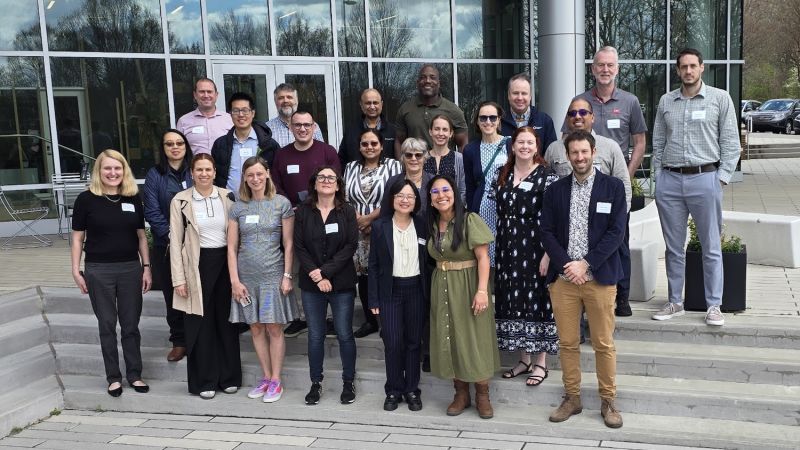
World-class scientists from both New Zealand and Serbia visited North Carolina State University’s Plant Sciences Building in March, strengthening collaborations to advance agriculture and protect natural resources through interdisciplinary research.
While the Serbian scientists visited with N.C. Plant Sciences Initiative partners in the STEPS (Science and Technologies for Phosphorus Sustainability) Center, five plant scientists from the Bioeconomy Science Institute New Zealand joined N.C. PSI-affiliated faculty and staff members for five days of collaborative discussion.
The NC State Office of Global Engagement and the International Collaboration to Accelerate Integration of Engineering, Plant Sciences and Agricultural Research Using Artificial Intelligence, or AI2EAR, sponsored the New Zealanders’ visit.
On Monday, the researchers joined NC State faculty members in a daylong digital twins workshop, followed up with meetings among faculty members and with different NC State programs, then wrapped up on Friday with agricultural site tours in Western North Carolina.
As N.C. PSI Director of Innovation Partnerships Kathleen Denya explained, the goal of the BSI-N.C. PSI collaboration is designed to spark problem-solving digital twins projects that benefit agricultural communities in New Zealand and North Carolina.
Digital twins research for agriculture brings together artificial intelligence, remote sensing and Internet-of-Things data to simulate “what-if” scenarios and predict outcomes related to plant performance, environmental impacts, use of resources such as fertilizers and water, and more.
Researchers from BSI and NC State plan to continue working together as they develop two proposals to develop digital twins – one for studies on any crop and one specifically for apples production.
- Categories:


