Excrement Enterprise
Mahmoud Sharara on turning poop into profits
There’s an on-farm product that’s full of potential to those with a waste-not, want-not approach – animal and poultry feces. Mahmoud Sharara, director of NC State University’s Animal and Poultry Waste Management Center (APWMC), says this digestion by-product can be the key to creating bespoke self-sustaining farm systems and biofuels, offering profit-savings and revenue-enhancing streams for farmers.
“What we’re calling waste is actually an input to a lot of valuable products,” Sharara says. “The nutrients and energy contained in animal manure can be processed and harnessed for so many opportunities.”
Efficiency and Resiliency
Animal and poultry agriculture is big business in North Carolina. Food animals make up 70% of North Carolina’s $100+ billion agriculture economy. With nationally top-ranking poultry and swine industries that produce millions of pounds of meat, the costs associated with production mean that efficient farming systems are crucial.
“The APWMC answers a lot of questions related to animal protein production efficiency,” Sharara says. “The byproducts coming from animal production are important outputs of the system that have not historically been utilized as efficiently as possible. Efficiency improvement directly connects to benefits related to competitiveness of food production in the U.S.”
Improving efficiency includes developing value-added products from animal waste.
“The nutrients in animal manure can directly be processed to become fertilizer or nutrient inputs for growing crops,” Sharara says. “We can customize the nutrients for different crops, targeting their specific growth needs to increase yield. In addition, a lot of the animal processing byproducts, including fats, oils and grease, can directly enter into the animal feed supply chain for aquaculture production or other feed.”
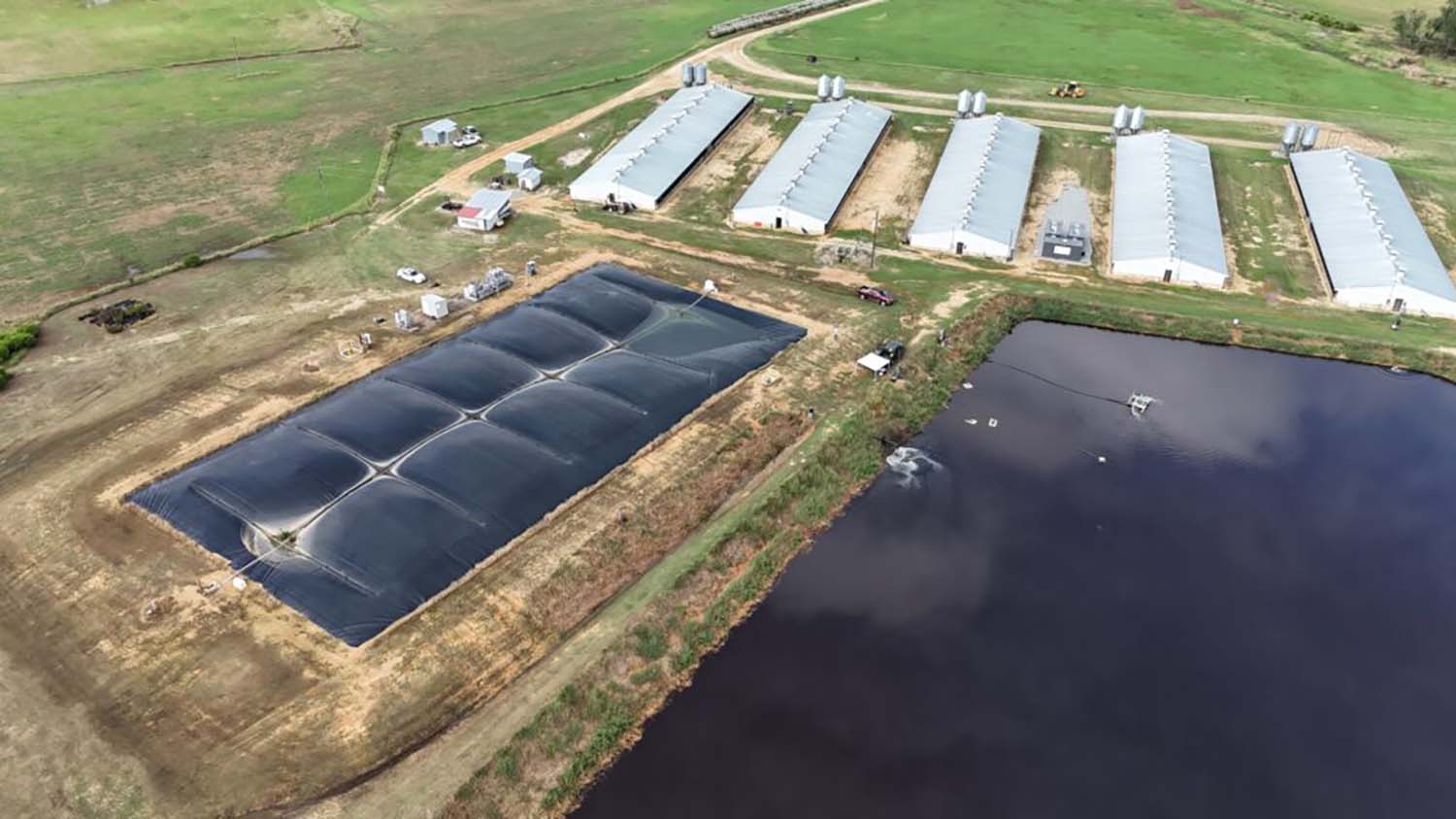
Animal waste can also be harnessed into energy such as biofuels. For example, covering manure storage allows farms to harvest methane and purify it as a fuel. An added benefit is that the process reduces nitrogen and ammonia emissions.
The results of this waste management system – reduced dependence on external resources for power, fertilizer, and imported animal feed.
“The harvesting of the energy and the nutrients means farms are able to produce a growing percentage of what their animal production requires,” Shara says. “That reduces the vulnerability and dependence on the global supply chain of changing markets, energy prices, and fertilizer prices, thereby ensuring the continuity of production.”
Finding new and economically viable uses for this underutilized resource also reduces the amount of feces that ends up in groundwater or possibly creates unwanted emissions.
“Waste management helps diversify income and production, adding to the health and well-being of our rural economy where many of these food animals are produced,” he says.

Climate-smart Agriculture for All
Current research initiatives of the APWMC include a resilience project funded by the North Carolina Department of Justice that models how swine production systems can manage manure in swine lagoons during extreme weather events.
“We looked into historical weather and future weather predictions to build a model that allows us to understand the critical points that can affect the swine production system,” Sharara says. “From there, we make recommendations to our growers to manage the liquid and the manure in their swine lagoons, and minimize the risk of future climate events that may impact the structural integrity of the lagoons.”
Additional projects address sludge management in lagoons and treatment structures, including the evaluation of commercial biological products and extraction and drying processes, which have resulted in industry adoption of commercial-scale drying systems.
The center also collaborates with industry partners, nonprofit organizations, and state and federal agencies to advance value-added innovations through training, tours and consulting services.

More to Digest
As 2026 gets underway, the APWMC is excited to look to the future, which includes hosting a national conference in 2027 and working to extend its services to North Carolina farmers and industry.
“Stay tuned,” Sharara says. “There are exciting things coming with our collaboration with the Food Animal Initiative. We are open for business and excited to work with industry, nonprofit agencies, and state and federal partners to help improve waste management and create value-added innovations for our growers.”
Waste Not
- Categories: